Another Announcement!

Matthew 3: 1-12

“In those days…..” thus, Matthew uses three small words to jump his readers from Jesus at about age 8 in his account into adulthood, most likely early 30s. But, before we will read more about the Messiah he introduces us to another person who will take on a major role in the “birth” of Jesus’ earthly ministry. Meet “John the Baptist”. Matthew doesn’t give us background information on John like the other gospels which tell us he was born a few months ahead of Jesus in the same time frame. His mother is Elizabeth who is a cousin to Mary, making him a cousin to Jesus. His father Zechariah was a temple priest, a position of prominence in the Jewish religion and community. But here, Matthew, begins his account with John as an adult, living in a desert region whose diet consists mainly of locusts and honey. Why we need to know that I’m not certain. Maybe it lends to how I envision him as a rugged nature loving survivalist kind of great outdoorsman! However one imagines what John’s appearance is, one thing is most certain and that’s in the message he is proclaiming.

I think John had a personality people were drawn to or because his message was something they’d not heard before, curiosity was their driving factor. Matthew describes the crowd situation as “went out to him (John)”. Not only did the people feel compelled to confess their sins, they also were being baptized by John. All this “new” activity caused the religious leaders to seek out John, too, who didn’t mince words with these men of high esteem within their communities. John’s strong words to them aren’t the most uplifting but that’s not where I want to camp out; I want to focus on verse 11: “I baptize you with water for repentance, but after me will come one who is more powerful than I, whose sandals I am not fit to carry.” (Other versions say “fit to untie”) What did John mean by that? Why are we talking about shoes in the middle of repentance, baptism and being chastised?

In the midst of introducing the Jews to a message of repentance from sin, accompanied with being baptized with water, John is telling them that another “one” is coming with greater authority, more power and that John doesn’t have what it takes to even untie the thong on his sandals. In the culture of the day among Jews, Greeks and Romans alike this office of untying and carrying the shoes of the master of the house or a guest was the well known function of the lowest slave of the household. You can imagine why perhaps. Remember, travel by foot was most common and there was plenty of filth to be picked up on one’s shoes along the way, dirt and mud soaked with animal excrement mixed in with whatever else fell on the roadways. Having to touch and smell the evidence of a man’s long day on his feet wasn’t the most refreshing job to have! So, by making this comparison with being unworthy, John is letting his audience know that he is NOT the messiah that the Jews have been long awaiting. He is beginning to connect the dots between Jesus entering the region and the approximate three or three and a half years of ministry that will invade the Jewish religious system and turn ancient laws and customs on the heels of reform and prophetic fulfillment. John does this with boldness, prophetic references, and reference to a daily custom concerning dirty shoes–all of which were familiar words and customs, now bathed in deep mystery that will slowly be revealed when Jesus comes on the scene. For the revelation to unfold, we must stay tuned…..
No Place Like Home

Matthew 2: 19-23

Upon reading these remaining verses in chapter 2 one might think hmmm…nothing exciting here. On the contrary, they are very relevant to how Matthew is telling his readers about the birth of Christ.

We remember that Joseph has taken his wife and young child to live in Egypt in order to protect his life from Herod. The warning and directive to do so came from an angel of the Lord in a dream. Time passes and how does God communicate with Joseph it’s okay to return to their homeland? He does in similar fashion, a form of communication that Joseph is now very familiar with–another dream–most likely the same angel.

Herod has died and is succeeded by his son Archelaus. Joseph is aware of this information and I think displayed godly wisdom and discernment thinking “like father, like son”….I don’t trust this guy anymore than I did Herod and instead of returning to Judea, Joseph takes the family to the district of Galilee and settles in Nazareth, all fulfilling prophecy that Jesus would be referred to as a Nazarene during His ministry.

How old is Jesus when the family moved to Nazareth? A quick search online found a site that stated He was around eight years old. Making an assumption of my own, I’m surmising that the family lived in Egypt about six years, based on Herod’s order to kill the male children two years old and younger.

During our trip to Israel in March 2019 we stood at an area overlooking Nazareth. It’s mainly inhabited by Muslim families now; the homes are close together in the rocky non descript terrain. The day we were there was overcast with a slight drizzle and a chill in the air. During our time at the archeological site we were visiting, it was time for the call to prayer in the Muslim community and we could hear the loud speakers throughout Nazareth airing the announcement which lasted a few minutes. The drone of the foreign words was eerie in nature as I thought of one religion overshadowing another, actually three as Israel is home to Jews, Muslims, and Christians. Seeing modern day Nazareth changed my memories of this city from years of hearing the Christmas story and subsequent readings of Jesus’ ministry. One thing it did not change is the reality of God having a plan. Prophecy foretold that the Messiah would come from Nazareth. Herold, with an evil plot to potentially kill Jesus, failed. Joseph, being an upright man, listened and obeyed each time God sent His angel with important instructions.

In times of danger, would we be prepared to act accordingly? How far would you go to protect your loved ones? I’m thankful for Joseph. Thankful for God’s voice through His angel. Thankful for a divine plan that we read about in these few verses.

A Collision Course in Time

Matthew 2: 13 – 18

In these short five verses Matthew exposes the corruption of one man’s mind as he continues to have a power struggle with the news of a “Jewish king” on the scene. King Herod is still plotting and scheming to not be pushed aside by ANYONE whom he deems as a threat to his rule. By now Jesus is about two years old, the magi have departed from their visit and ignored Herod’s instructions to return to his palace and tell him the whereabouts of the child so that he, too, could go an worship Him. But God!

God, who knows the heart of a man, knew Herod’s true intentions which were to eliminate Jesus once and for all. I cannot help but stop when reading about Herod thus far in the account of Christ’s birth and reflect on how deep evil ran through his mind. To kill a child that you felt threatened by? Yet, I am not surprised, but those are thoughts for another day.

So, with a real threat on the horizon of hate towards His Son, God uses His angel to instruct Joseph to take his family to Egypt and stay until Herod’s death. Interesting. My flesh thinks “Why, God, You could have easily removed Herod from his reign or allowed circumstances of death to take him out….but you didn’t. You chose mercy. You chose to protect your Son and his parents another way. You removed them and put them into Your witness protection program! And you allowed Herod to show and amp up the evil desires of his heart by making a declaration that all boys under the age of two in Bethlehem were to be killed. This act of violence and bloodshed is not a heartwarming aspect to the Christmas story at all; I certainly wouldn’t want to dwell too long on Herod’s decree when telling or reading this to a child. Yet, it happened. It was real, it is part of God’s story. And, as I reflect upon it, I see a collision of two governments –Herod’s earthly kingdom has been hit by the supernatural power of God’s sovereignty, and all hell broke loose. Literally. This is a spiritual battle. Herod is but a pawn being used by satan, the once beautiful angel of worship in Heaven who was kicked out, thrown to earth, and is now the father of all lies, and governs forces and principalities working to destroy everything good that is of God.

In Herod, I see many of the same negative attributes in people today. We are not without men and women who want power, want to be kingpins in business and government. We have tension between Judeo Christian values going up against some leaders more often now than I can recall in my adult life. But, we also have a God Who is above all we read and see, Who has a plan of escape for us, perhaps….but most assuredly a path to salvation and protection no earthly plan can match. We have Jesus.

What Gifts do You Offer?

Matthew 2: 1-12

Matthew now introduces and tells us the account of the Magi who travel from the east to seek and find the Christ child, following an incredible star as their only guide. They must have been men of great wealth in order to embark on such a long journey that would have taken months. Upon “hearing” about the birth of this new king, they “saw”, they “went”, they “asked” which means they responded with all of their being.

Further unpacking the story reveals that upon arriving at the home of Mary and Joseph where they were living with the young Christ child, they knelt down “in the presence of the child and worshipped. Then they presented the child with gifts consisting of gold, frankincense, and myrrh. Their worship and their gifts bear great significance for us. Why?

First, these magi were not Jews. I did not research what countries they originated from, therefore, these men of must have had great standing in their home countries, who heard of some great news and “went”…”came” to find for themselves who this new king was that was born in a far away land. Secondly, though they were not Jews or citizens of Jesus’ country, they still acknowledged Him as royalty–a king–and worshipped. I don’t think they thought they were giving proper honor to an earthly king; I think that God revealed His majesty and glory in the person of His Son while in the presence of Jesus. Why do I believe this? A careful look at their gifts gives us an answer, a prophetic one.

The first gift was gold. Gold was considered a precious metals for kings. How often do we read in scripture where Jesus is called the King of Kings? And, on the day of his crucifixion the soldiers wrote “King of the Jews” on the wooden plank that was above His head.

The second gift was frankincense. This expensive essential oil was mixed with olive oil to anoint the priests who served in the Temple. By presenting this fragrant oil to Jesus, the magi were pointing to Him as becoming our High Priest.

The third gift was myrrh and perhaps the strangest. Myrrh was used for embalming. Why would someone give a substance used in death to a young child? This gift was a prophetic one in nature, a foreshadowing of what lie ahead for the Christ, the reason He was born, the culmination of a holy plan birthed in Heaven, birthed on earth, bathed in the mysterious and miraculous plan of salvation that only a holy God could create and execute.

The magi’s curiosity and obedience offer us a wonderful example of how to respond to the news of Christ. We don’t have a star to guide us to Him but God has made a way for every person to “hear” and “see” that His Son is the Christ. We have the scriptures inspired by the Holy Spirit. Upon hearing the news of Christ, how will you respond. What gifts do you offer?

A Birth Like No Other

In a mere six verses (18-24) Matthew gives us his version of the events surrounding the birth of Jesus. Who and what components make up his description.

Who are the main characters? We have Joseph, Mary, an angel, the Holy Spirit.

What else is present? We have a dream and a reference to prophecy as recorded in the Book of Isaiah.

Imagine if you will that as a man who is fully in love and devoted to your fiancé, that you are presented with the shocking news she is pregnant and you know that you have not had intimate relations with her. What do you do? How would you react? To understand Joseph’s reaction we must grasp the evidence of his character. Joseph is described as “faithful to the law” and as a man who possessed great integrity “he did not want to expose Mary publicly, he chose to divorce her quietly’. How can one divorce another person when they aren’t yet married? The answer is contained in Jewish tradition regarding marriage. In the Jewish culture when a man and woman became engaged (betrothed) they were considered “married” until the actual ceremony was held. The young man took time to build an addition onto his father’s home in preparation for his bride to join him in their new home and the young woman prepared her wedding attire and chose her bridesmaids. When the home addition was deemed finished in the father of the groom’s eyes, he would tell his son “go get your bride!” So, perhaps Joseph was in the midst of building the home he and Mary would share, we don’t know. What we DO know is that Joseph is hesitant to move forward with marrying Mary. But God!

In a dream, an angel of the Lord appeared to Joseph and assured him how the child was conceived and WHY. This angel even quoted the prophet Isaiah and if you noticed, referred to Joseph as “son of David”. These two things factor into the validity of Matthew’s record–again, appealing to his Jewish readers with information they would have been firmly acquainted with down through their generations of reading from Old Testament scrolls and the meticulous records of genealogy.

There’s another small detail that is contained at the end of this portion of scripture that some may overlook. It’s a detail Matthew felt was necessary to include to prove that Jesus was not conceived by human intervention, a conception that could only be attributed to God. Upon waking from the dream, Joseph has the command to take Mary home as his wife…they are now living in their new home…and the newly married couple does not consummate the marriage until AFTER Jesus is born, thus giving the Jews–and us–evidence of the miraculous birth of God’s Son.

I love how Matthew weaves together the miraculous and practical aspects of Jesus’ birth. The forces of Heaven and earth were united and overturned at the same time upon His arrival.

Read Matthew 1: 18-24

All in the Family

It is the onset of the Advent season, those four weeks Christians anticipate and celebrate the birth of Christ. It’s a time for the lighting of Advent candles in our worship services and reading of scriptures that pertain to the Christ child. Last year I read through the book of Luke as part of preparing my own heart and mind for His birth; this year I have chosen the book of Matthew. So, today, December 1st, I read Matthew 1: 1-17 which gives us the genealogy of Jesus. Why does Matthew begin his record by telling us the lineage of Christ? I believe it’s because he wants us to know that Christ came from people who truly existed, are recorded in Old Testament history and would have been very familiar to the Jewish people. With the named are Abraham, Isaac, David, Solomon, Rahab, Ruth, Tamar, Jacob. In total, there are three sets of 14 generations listed by Matthew up to and including Joseph and Mary, the earthly parents of Jesus. (verse 17)

An exhaustive study of each man and woman listed in the genealogy would reveal with absolute certainty that not one them was a perfect human being. I won’t give a character report on all of them, but I do want to point out several, and I chose to look at the women listed here by Matthew. First is Rahab. She was a prostitute. She was not a Jew, therefore, she most likely worshipped other gods. Yet, God used her in a mighty way to protect and carry out a big plan. Second, we have Ruth. She is not a Jew either; she had married a Jewish man and was widowed. By later marrying Boaz, her kinsman redeemer, she is in the lineage to bear children, for the future of King David’s arrival. Third, there is Tamar. She was the daughter in law of Judah and when she was widowed she fell prey to being ignored by her brothers in law who were supposed to marry her and give her a male child to continue the bloodline of their deceased brother. So, she tricked Judah, seduced him and became pregnant. Lastly, there is Bathsheba, who became the wife of King David after an adulterous affair.

Do any of these women sound of pristine character to you? Certainly not by worldly or biblical standards. But God! These women are among a group of men, who by their own doings, failed tremendously to live perfect lives. Abraham himself fathered a child with his wife’s maidservant. King David lusted after Bathsheba and even had her husband killed in battle in order to cover up his indiscretions.

Forty two generations of imperfect people led to the exact moment in history to give the world a perfect savior. I found it interesting how Matthew broke down the generations by stating: “Thus there were fourteen generations in all from Abraham to David, fourteen from David to the exile in Babylon and fourteen from the exile to the Christ.” Why break the genealogy into three segments? The number 14 in Hebrew means “deliverance” or “salvation”. (www.biblestudy.org)

I’m looking forward to reading the book of Matthew with a new set of eyes during the month of December. I hope you will come along for the journey and discover new and deeper understanding in the person of Jesus. Who He is. What He came to do. And how we can know Him better and with great intimacy.

Read Matthew 1: 1-17

What Stick are You Holding Onto?

Recently, my husband took our five year old granddaughter and 19 month old grandson outside on a chilly evening after dinner. The purpose was to get outside for some fresh air, burn off some energy and most importantly, spend time together before baths and bedtime. I stayed inside and let them enjoy their time together as well admittedly, have some “quiet” after being with them for the day. When it came time for the kids to come back inside, little Coby had a stick in his hand, tightly clenched as though he had discovered something very valuable. His stick was actually a cut up stalk from a pokeweed plant my husband had cut down as their berries are poisonous, thus removing fear and temptation from the reach of small hands.

Coby’s hand, which was grasping that weed’s sawn stalk, was pink and cold from the evening walk so I began to gently “pry” his fingers loose in order to remove his jacket. Uh uh, he wasn’t having ANYTHING to do with that! He wanted the prized stick; it was his…he had found it and laid claim to everything mystical and magical his little mind could imagine. Tears flowed and moans of disapproval began to fill the house as I explained to him “I need to take the stick for a just a moment so gramma can get your coat off’. I’m not sure how much he understood my motives but eventually he loosened his grip and we were successful. Phew! Little boys and sticks are pretty important, I guess.

Today, our message in church was “Don’t Be a Stick”, based on John 15 where Jesus talked about being connected to the true vine. He warned the disciples (and us!) about three types of branches: 1) those not bearing fruit 2) those that ARE bearing fruit and 3) The ones that are not connected. Our pastor used a line that I wrote down because it stuck to me…”Don’t be a stick….some people are pretending to be branches”. (my paraphrase) Why? Sticks and old branches eventually get tossed on the burn pile. As I listened to his teaching, I envisioned Coby hanging onto his “stick” with every ounce of his emotional and physical capacity. He had “found” that pokeweed stick and by golly he wasn’t about to give it up without a struggle. As the images of his behavior from Friday evening floated through my mind the Holy Spirit used it to remind me of how often I grab hold of earthly things, clutching them tightly to me and thinking how I NEED this….I DESERVE ….I CAN’T let go of that behavior, bad habit, or past mistakes. But then along comes the Holy Spirit Who begins to gently pry me away from my false treasure. Phew! Little boys and sticks are pretty important. Grown women and sticks are important, too, as long as they are pointing out a much needed life lesson before being thrown on the burn pile.

What is the Right Way

My morning scripture reading took me to Psalm 27, one that has been a favorite, thus quite familiar to me from past readings. The things I like about this particular psalm is that I can ask God to teach me. I’ve been told by several individuals that I am “teachable” which pleases me. I never want to arrive to a place in my mind  believing that I have learned everything there is about God, life or myself. Having said that, verse 11 is where I landed and where I focused my meditative thoughts. The verse says: “Teach me your way O Lord, lead me in a straight path because of my oppressors.”  While I currently don’t feel oppressed, I’d be a liar if I said I’ve never felt that way. But, what I want to focus on right now are two key words that stood out to me..way…and path.

If I’m to remain teachable, it’s important for me to learn truth. I can think of no better truth than that of God and He has provided an excellent book to give me what I need–His written Word, the Bible. He possesses all truth and IS the way of truth and life. I looked up the Hebrew definition for “way” and found that it means: choice, alternative, possibility, pick, selection, intention, direction, aim, tack, course. Wow I thought–those expansions on the definition sure shed some light on my morning pursuit to understand “what is the way of the God?”

Society and culture are waging battles to lure me into making choices every day, believing alternatives to God’s established truths, picking and choosing what I can and should believe. All I have to do is browse social media  and my mind is flooded with a wide range of opinions on important topics.  If I lack direction pursuing truth I can easily get off course. I LOVED seeing the word tack among the definitions because I  love being on the water in the safety of a boat, especially one with sails. Anyone who has ever sailed knows that the person manning the sails HAS to know how to tack. Otherwise, the boat won’t move along in the waters or even more dangerous, get off course.

So, to know God’s way and His truth, proper direction and aim are necessary components when  capturing true knowledge of who He is and what He wants me or you to know in order to live according to His will. How else do we pursue this goal? We do so by allowing Him to lead us on a straight path, a trail that is smooth, level, a journey, orbit or circle, in His manner. Wow again! How many times do we refer to our faith life as a “journey” or feel like we are going in “circles”? I don’t believe the word “circle” here is being used as negative, that feeling of describing our personal chaos as “going in circles”; the picture I have of this word is that God can bring us “full circle” in life, in circumstances, from beginning to the end of ourselves.

My brief study of these two words–way and path–certainly were not exhaustive, therefore, I don’t want to think or believe that I’ve totally examined this one verse, but what my short study revealed to me and has left an imprint on my spirit is: I am a woman who needs continual teaching and what I learn should be God’s way, not mine. I am encouraged to ask Him to lead me while I’m learning. My path of life is always going to take me through circumstances and encounters with opportunities that want to pull me in a variety of directions. But, God says even though those oppressors are along my path, He will keep me on course. He’ll do the tacking. He’ll keep the path smooth and level. I cannot think of a better course to follow than that of God’s perfect will for my life and wear the correct shoes while on the path.

Shared Innocence

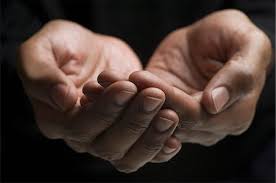
cupped hands

I met him at Yad Vashem, the holocaust memorial that is in Jerusalem. We were both standing at an exhibit which held numerous menorahs, candlesticks and breastplates–all items used by Jewish families celebrating a variety of holy days. I hesitated to speak to him due to the solemness in the room, but I needed to know what the breastplates were; I had not seen them before that day. So, with slight hesitation I made eye contact with the man and quietly asked “English?” “Yes”, he answered. I asked my question and he gladly explained what the breastplates were and how they were used. Sadly, I cannot recall which holy day he told me.

The quiet of the room stirred me to ask this kind quiet man if he had family that lived through the holocaust. “My grandparents, all gone. I come here to gain more understanding of what happened. My father survived by jumping a train.” I didn’t detect anger or bitterness as he continued with his gracious conversation with me. In fact, he thanked me for my interest and his ability to teach me in that brief moment.

I could have ended our conversation after his short explanation of the beautiful family possessions displayed under the clean glass. But it didn’t. Knowing that I was in the presence of a Jewish man close to my age who had lost family members made my visit to the memorial museum take on a deeper moment in time now etched into my memories. I felt compelled to tell him “Sir, as a Christian I am so sorry for your loss and the horrible treatment they suffered”. His demeanor remained one of a quiet calm as he answered me “thank you, I come here to learn, to understand, and to make certain this never happens again.”

“Yes,” I answered. Yet, with another surge of boldness in sadness I responded to his gentle admonition “I fear in America we have our own holocaust happening as we allow the abortion of millions of our children”.

He looked at me. Our eyes met as he cupped his hand and with his same gentle voice said, “That is so wrong, for they are God’s created innocence.”

Millions of innocents during the holocaust of the 40s. Millions of innocents in America since 1973. Both groups are God’s created innocents. Both groups have faces, have eternal spirits, have value with God the Creator. Both groups held a valuable and memorable meeting in time on Sunday, March 31 as a Jew and Gentile met in a room illuminated by the lights behind clear glass displaying family heirlooms once used to worship their Creator. Their purpose has changed, yet now give way for encounters and conversations that can only be orchestrated by the Divine or a hint of quiet boldness from one stranger to another.