
FAMILY IS EVERYTHING

“A father loves completely, gives quietly, teaches gently and inspires deeply”.

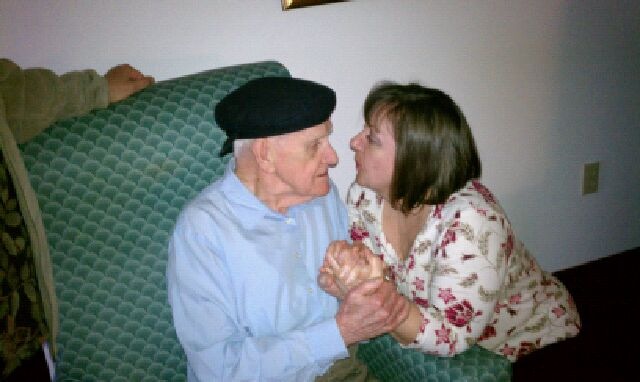
Though not consumed by it at all, this week my thoughts have been infiltrated by quiet reminders about my dad. His birthday is Oct. 15, he would have been 105. He died in 2012 after living a pretty amazing life, taken down for the last 3 years by the horrible effects of Alzheimer’s Disease, an illness I wish on no one. This disease robs people of dignity, purpose, awareness of day to day life complete with daily routines or occasions to celebrate family experiences. Mainly, being in the midst of the disease’s throes steals precious memories and ability to communicate. As much as it deeply saddened me and my family to see our dad and grandfather live in anguish, the disease didn’t define his life. It was merely the closing chapter of his life’s book, with less words written to describe that time as compared to almost 90 years of a life that thrived.

Did my father love completely? I don’t have enough space or words to fully answer that question. In simple terms, yes. “Family is everything” was one of his last formed phrases after moving into assisted living care. Conservations during those three years slowly declined in substance. Searching for the right word became a common struggle, yet those three words often summed up every visit with him.

Quiet and gentle? Those are two very good adjectives for dad. I don’t remember a raised voice or harsh word spoken to any of us kids. Discipline came with reasonable conversations, direct instructions, sometimes with just enough sarcasm to accompany a serious facial expression to drive home his point. Physical punishment didn’t exist in our childhood years. Maybe it was because my grandfather had taken liberty with spankings that left emotional scars and a decision to “do differently” with us kids.

Did my dad teach gently and inspire deeply? I smile remembering how many times my brother Mark’s bike lay in pieces on the driveway. For some reason, Mark enjoyed taking things apart, learning how to reassemble. Dad’s only complaint was that too many times missing tools from his workbench interfered with completing his own projects. Mark was the one who dad took along on home improvement projects he did as side jobs to earn extra income for our family. Mark had the aptitude and interest in learning how to measure, plan, and build which came in handy when he built his own home years ago. Not surprisingly, dad was there to help, still able to climb a ladder and yield a hammer well into his late 60s at the time. Brother Dave didn’t get the gift of craftsmanship by any means. What he lacked in that department was made up with an appetite to read books, retain the knowledge he gained and hold conversations with anyone he met. He was a natural athlete even though he never played an organized sport. His physical strength came in handy to carry building materials. Dave was more comfortable with a book on his lap instead of a hammer in his hand.

Inspiration from dad was given mostly from example versus verbal encouragement or commentary. We knew how to love because we witnessed firsthand how he embraced family, his own as well as in-law members. Acceptance of each one seems to have come easily to him. I like to think it’s because he had seen how his parents lovingly accepted a variety of 11 sons and daughters in law as each child married. 

Dad took our family to church, too. Growing up as a kid on a farm, it was his mother who took responsibility to get the children to church. When attending in person wasn’t possible, “church” was held in the living room. She was the family’s spiritual leader for many years. My mother was raised going to church since birth and her relationship with Christ was foremost in her life. Dad joined her church after they married and that’s the one we attended until I left home. He became a trusted quiet leader in the congregation, yet I can recall times he spoke his mind at board meetings, never to condemn someone’s opinions, rather to shed common sense biblical truth on matters of discussion.

So, as I think about his birthday rolling around again, I can’t help but smile. I am deeply grateful for his life and the role he embraced in my own life teaching, encouraging, correcting, leading by example from a spirit of wonderful love.

“Family is everything”. I’d love to hear him say those three words one more time. That last time he spoke to me he was struggling. He had taken hold of my hands and looked at me with great intention as he wanted to express “something”,  trying to push aside the clouds of dementia swarming in his mind. At that moment, I didn’t need a long flowing narrative about whatever was anchoring his thoughts. Those three words spoke everything I needed to hear…love and gentle quietness in an aged mind,  surrounded by circumstances and precious memories that spanned a life worth living.

—-

According to census.gov the number of children living in fatherless homes has doubled in the last 50 years. That statistic is heartbreaking. It’s also a reflection that “something” has become broken in our family relationships. Whatever the reasons for this outcome, I pray that our children will become a priority to fathers everywhere.

A LESSON IN HUMILITY

“A simple act of kindness has the power to change a life”. (Author Unknown)

Lasting impressions or experiences in life have a way of remaining in one’s memories either to bring a smile or a pause of reflection. In today’s instance, it’s a smile underscored with gratitude for choosing kindness and patience.

I was in the middle of a very busy day filled with multiple reports, letters, memos, customer files to type. This was before the days of using a word processor to ease these tasks, everything was still being done on an electric typewriter. Factoring in taking phone calls or assisting an occasional walk in customer, this particular day was filled with many responsibilities that needed completion in a timely manner. Thus, interruptions were not my best friend. Looking back I can now see where a disruption to my work actually could be defined as divine appointments. Why? Because by taking a look at who’s involved, the reason for a brief meeting, and all the emotions that were produced, there was a lesson to be gained. So, even though I don’t remember the day of the week or the exact time when she came to our office, I can still see her face, her tears, fear and grief as I brought her to a place of privacy and quiet to answer her questions.

Sitting with me at a small table was a beautiful woman in her mid to late 40s. Her hair was styled very neatly. As I listened to her request for help, she began pulling bank statements along with her checkbook from her handbag. “Can you help me? I don’t know what to do…how to write a check….or what to do with these statements.”

I was caught off guard. I thought her visit to the bank was merely to reconcile a transaction or two that could be solved easily in a few minutes. Instead, I realized the problem was more complex. What I could do quickly and naturally was totally foreign to her. But why the tears?

As I sorted the statements, taking her checkbook in hand to open and lay aside, she explained as tears rolled down her brown cheeks that her husband had recently died unexpectedly. She was mourning. She was still in shock. And she was full of anxiety. Slowly she told me how it was he who had always paid the bills. He took care of all their finances. She wasn’t upset by being left out so to speak. She was describing how–in this sudden new place of being widowed–do I do this.

Over the course of what had to be an hour or so with her–all the while in the back of my mind–I’m thinking “I have SO much work to do….” I found myself feeling resentful, not towards her, but facing the time her needs were taking from me. 

Like a teacher with a young student, I walked her through how to write a check in order to pay a bill, and how to enter it in the register of her checkbook. Because a couple of months had gone by since her husband’s death and her account hadn’t been reconciled to bank statements, I made the decision to start her balance with the amount “the bank” reflected on our system. With that number, I taught her how to add, subtract, and gave a brief lesson on how to “balance” her book balance with the bank’s when her monthly statement was received.

All seemed to go well as she listened and appeared to comprehend my instructions. Yet, I could tell she remained apprehensive. She even mentioned she may need more help and alluded that I could become the person she’d lean on. Although that was certainly feasible, it wasn’t an ideal solution. To ease her fears, I asked “Is there someone you trust to help you for a while? To sit down with you to help write checks and balance your account until you’re totally comfortable on your own?”

“I think so,” she said. “I can ask my pastor.”

Ah. I breathed a sigh of relief, for her and for me. “I’m so happy you have a pastor, someone you trust to help you.” Being able to affirm her choice and send her on her way was a win win for both of us. She could begin to move on in the complexity of embracing widowhood and I could selfishly return to my workload.

But, before she gathered her statements and checkbook to return them to her purse, she caught me off guard as she bowed her head, closed her eyes and quietly said “Jesus, thank you for giving me this woman to help me in my time of need … .Amen.” Those aren’t the exact words I am able to remember from over 40 years ago. My lapse in memory in that regard isn’t important. What’s at the forefront is a lesson in humility I learned that busy work day. God used a task oriented young woman and a grieving widow to break down what’s truly important, an experience directly pictured in Matthew’s gospel:  “Whoever acknowledges me before others, I will also acknowledge before my Father in heaven.” (Matthew 10:32)

I was still quite new in my own faith journey as a Christian when I met this “customer”. She’d been living in a relationship with Him longer than I. That day I was consumed by worrying if I’d get my work finished for coworkers relying on me. She was focused on expressing humble gratitude to God for meeting a need that had previously filled her with anxiety.  Her sweet humility and boldness for Christ far outweighed my selfishness or her fears.

An online quote I found says “A simple act of kindness has the power to change a life”

Over 40 years ago two simple acts actually changed two lives. As one grieving widow learned some basic skills, one slightly embarrassed young woman observed genuine faith and appreciation expressed in an unashamed prayer of thanksgiving.

I never saw her again. As time went on after our brief encounter I did think of her on occasion, hoping she was getting the help she needed. Thoughts of her soon faded, until today when memories of her came back as a reminder for me–hopefully for you, too,– that indeed, “simple acts of kindness DO change our lives”.

TWO STRANGERS, ONE SANDWICH

In John’s gospel we can read about one of Jesus’ miracles when he fed 5,000 people. In reality, there was probably a greater number that dined as some scholars note that women and children may not have been included in the count. No matter where you fall on either side of the number, the miracle is of great significance considering the measure of basic groceries He worked with to accomplish serving an extraordinary meal! 

It was Jesus’ disciples who were given the task of finding food for the large crowd. Can you imagine their dismay or astonishment that the huge undertaking was given to them in such a casual manner?

“Where will we buy bread for the people to eat?” is the question Jesus posed to Philip. I’m sure he shrugged his shoulders while going directly to common sense for his response.  “We don’t have enough money”…even pointing out how long it would take to earn wages sufficient for  purchasing bread. Along comes Andrew. He’s got a solution. Perhaps he’s been out scanning the crowd looking for “anything” that might be considered an evening meal. He’s found a boy who has five small loaves of barley bread and two fish. Hardly enough to feed an entire family let alone a multitude.

Giving further instructions, Jesus has all the people sit down. The bread and fish are then blessed, the miracle of increase happens and thousands of bellies are satisfied. A little boy’s dinner–under discovery by Andrew and miraculous touch by Jesus–has saved the day. This miracle stirs the people to begin believing that Jesus “is the Prophet who has come into the world”.

What about our little boy? Other than reading it was he who had a small meal with him, no further mention is made after surrendering his bread and fish. Was he alone that day? Did his parents stay behind at home while he ventured off to join thousands on a mountainside to listen to Jesus? By now in his young life, he too had heard about “this Jesus” and wanted to witness for himself Jesus’ teachings and ability to heal people. In preparation for a long day, his mother packed him a “lunch”. 

Years ago I was returning home after spending a week in San Jose with a close friend. Because we both knew that airport food can be expensive, she packed me a light lunch which consisted of a peanut butter and jam sandwich. I think I had an apple, too. Regardless, the sandwich would suffice to tie me over until arriving in Detroit.

Seated next to me was an Asian man. We exchanged smiles and an attempt to converse with him proved cumbersome as I quickly realized his limited command of the English language. I was able to understand that he was traveling “home” to attend his father’s funeral. Of course, I offered my condolences, returning to sitting quietly. Until my stomach began to growl and the anticipation of enjoying my sandwich grew.

I opened my lunch bag, took out my sandwich. My seatmate was looking out the window. His countenance was one of sadness and waiting. I tapped his arm gently and asked “would you like half of my sandwich?” I figured if I was hungry, surely he was as well. Smiling and nodding his head as a courtesy, he accepted my small offer.

I wasn’t looking for my small lunch to “miracuously” increase. Rather, I hoped that by sharing a small meal with someone from another culture, one who was grieving as any person would do under similar circumstances, that in our few hours together  simple kindness would cross language barriers and in turn create a lasting memory to cherish. I know for me it did.

Jesus’ miracle of feeding over 5,000 people didn’t merely end with full bellies. In fact, the food He blessed produced leftovers! Enough to fill 12 baskets! I think it’s significant that each disciple had a basket to gather the leftovers…maybe Jesus’ attempt at a bit of humor to prove a point regarding trust and provision.

Sharing my peanut butter and jam sandwich didn’t leave any crumbs. All I had to show for that afternoon was an empty baggie and brown paper bag. The plane landed. I had given the flight attendant my empty “trash”. My seatmate and I disembarked but not before sharing more smiles and him nodding as a “gesture of appreciation” to me. 

Kindness and generosity can be extended to over 5,000 people. And, it can also be offered to one. One little boy’s surrender helped produce a miracle for many. I’m pretty sure when he returned home that evening he had a lot to tell his parents!

KINDNESS THAT TEACHES LESSONS

My work phone rang. It was Pat, our receptionist at the front desk, on the other end.

“Sue, I have a Doc —- here to see you.” 

“Tell him I’ll be right up”.

Click. Doc? Of all the customers I had been helping during my banking career he was one of few I’d have expected to have stopped in to see me. 

I met Doc in the 80s. As part of my duties working in the administration department of Saginaw’s branch system for National Bank of Detroit, opening new accounts was a routine. Personal banking was catching on in promoting customer service ideals so when Doc’s letter came to our office it was given to me for follow up.

I met Doc who was living out of town at the time. He had a job that gave him some small earnings. He wanted to have his account in Saginaw where his mother, as a co-signer, could have easy access. So, thus began what resulted in several back and forth transactions which took place over the course of about a year. Doc would sometimes mail me a check to deposit. On occasion he phoned me to authorize a withdrawal. Each conversation was always pleasant, nothing out of the ordinary for someone taking care of a routine financial translation.  Our conversations weren’t very long, enough time to briefly catch up with one another merely exchanging pleasantries mingled in with the reason for his call. He was an out of town customer–we had others–so it never crossed my mind that we might meet one another face-to-face. Until Pat from the front desk called.

After hanging up her call, I walked to the receptionist desk. Standing there was a young black man dressed in athletic clothing, neatly groomed. He appeared to be in his 20s. 

“Doc?”

“Yes, ma’am”.

“Nice to meet you. Please come with me to a conference room where we can talk.”

As he followed me I caught a glimpse of Pat’s eyes and facial expression. She looked a bit concerned.

Doc sat across from me at the table.

“What can I do for you, Doc?”

“I just wanted to come meet you Mrs. Kretchman and say thank you.”

“Thank you for what?”

“For being so nice to me.”

“Nice to you? I try to be nice to all of our customers”.

“But it made me feel good you were nice to me, seeing’s as how I was in prison”.

Yes, Doc was in a state prison when he wrote his letter to us asking if he could open a savings account. After reading it I took it to my boss and remembered asking ‘do we open accounts for people who are in prison?’

‘Do they have money?’

His subtle correction to adjust my judgemental attitude was duly noted. Therefore, a banking relationship between a young white woman and a young black man was established, resulting in opportunities to provide him with banking services enjoyed by thousands of residents in our area.

I remember asking Doc what he had done that required him to serve time. “Breaking and entering” he told me, “But I’ve learned my lesson.”

We didn’t chat long. I escorted him to the front desk, said our goodbyes and turned around to see Pat’s lingering facial expression telling me she was in a mild form of shock.

“Sue, how could you take him to a conference room with no one else with you!”

“Pat, I wasn’t afraid”.

And, I hadn’t been afraid. I was too caught up in the wonder of why Doc was standing at the reception desk when I clearly thought “isn’t he in prison?”

Being kind to Doc was not second nature for me. It was–and remains to this day–common practice for me. Kindness was taught in our home; it was modeled by grandparents, numerous aunts and uncles, teachers and other adults who had been influential in my formative years. Kindness is a fruit of the spirit–not any spirit–but that which comes from God. It’s a fruit that is produced when a person is connected to Him as the master gardener. Yet, admittedly, sometimes like fruit that begins to spoil, my consistency in being kind has been challenged. Even when I fail, I don’t give up trying.

A lot of time has passed now since meeting Doc. He doesn’t come to mind now very often except on those occasions when a lesson of kindness is needed between two very different people. When he crosses my mind I wonder where he’s living. What kind of job or career did he land for himself? Have there been other people God put in his life to continue offering kindness along with being treated as one of God’s children?

I hope so. Moreso, since he had experienced being imprisoned by man for a short while, I pray he’s found complete freedom–the kind given by God through His Son Jesus Christ. 

YOU NEVER KNOW

“I love you.”

Meet Betty. She’s a woman in her 50s who had a deep love for Christ and a passion to mentor young people. When I first met her she was serving as a volunteer for Teen Challenge in Saginaw. Young men who had fallen into addictions and numerous encounters with the judicial system could enter their program for a last chance approach to finally be free from whatever chains were holding them back from being clean and productive members of society. The house wasn’t large, home to less than a dozen at a time, and the ministry’s rules kept everyone under one roof with strict guidelines for daily living. Everything that was taught or activities to rebuild broken emotions and bodies centered on the Gospel. 

It was game night. Probably a Friday. The boys were scattered around the living room playing a variety of board games. Betty was there to help serve snacks and supervise. She loved taking on the role of “mom” or “grandmother” to these young men and getting to know them through conversations was important to her time with them every week. It didn’t take her long to get acquainted with the boys’ personalities and how to communicate on their level. Except for John.

No matter how hard Betty tried to connect with John she often failed. He wasn’t like the others. Her corny jokes or inquiries about his week didn’t penetrate his sameness and cold exterior. She felt as though she was letting John down. That’s when she turned to God and prayed “let me reach John, Lord. What can I do?”

Not knowing if God had been silent to answer her prayer and still feeling desperate on a usual Friday evening of games, as she scurried past John heading to the kitchen, she tapped his shoulder and whispered softly “I love you.”

John didn’t flinch. His posture didn’t change from being touched. He remained sullen and non-emotional after the brief encounter. Betty went about her duties serving snacks. At the end of her “shift” she went home.

I met Betty when I was new in my own faith walk. Sadly, I don’t recall all the details of our meeting but I recall it was centered around Teen Challenge and an invitation from a co-worker to learn about their ministry. It was during one of our times together that Betty relayed the story about John. Betty’s story with John didn’t end when she left her shift the evening she spoke those tender words  “I love you”. John finished out his time at Teen Challenge, graduated and reentered life to find a career. As with most of the boys, she’d never hear from or see them again.

Until one evening, several years later, Betty was home, sitting and reading. That’s when the telephone rang.

“Hello?”

“Betty?”

“Yes, this is Betty.”

“Hi, Betty. I don’t know if you’ll remember me. It’s John. From Teen Challenge.”

Betty searched her memories. John? It was easy to remember the boys who were vivacious and easy. Was John one of those?

“It’s okay if you don’t remember me,” the voice said quietly. “I remember you. And I’ve never forgotten the night you told me you ‘loved me’.

Now it was coming back to Betty. John. The John who she thought she had failed. The John who had a hard time being happy or capable of carrying on any form of conversation. Was this the John she had often worried about?

“Betty, I want you to know I’m doing great. I’m married and I have a family. And, Betty? You want to know something? I’m a pastor. And Betty? There’s something else. Before I met you no one had ever told me they loved me. But you did. I’ve never forgotten that or you. So, Betty? I just wanted you to know, ok?”

Betty hung up the receiver and allowed herself to be swallowed up by quiet and awe which now filled her living room. Tears streamed down her face as she recounted her experience with me. It had been several years between John’s phone call and making our acquaintance. She could recall every detail with beautiful clarity. She may have forgotten about John for awhile but God’s providence reconnected them, giving her another testimony to stand in the test of time.

Why did Betty share this story with me and others who were making a commitment to join a prayer group for Teen Challenge in Saginaw? Because, in her own words, “don’t ever underestimate the smallest of gestures to bring Christ’s love and hope to a young person who is hurting”. 

Having Betty cross my path happened over 40 years ago. I’m sure she’s no longer with us, enjoying heaven now and celebrating the fruits of her labors and the powerful effects of her three small words “I love you.”

And, John? Only the Lord knows where he may be today. Hopefully, his ministry thrived and he helped fill up heaven a bit more because of a changed life that heard a call to become God’s servant behind a pulpit and in the communities he lived. 

John had experienced a touch from the Master through a middle aged woman who didn’t let her fear of failure stop her from trying to reach a quiet, sullen unhappy young man. John took  his “I love you” and turned it into “Jesus loves you” with each sermon he wrote. 

Our world is full of “Johns”. We need more “Bettys.”  I’m thankful I met Betty and that I learned about John. Her testimony of simply speaking “love” into someone’s life helped me to focus on becoming an encouragement too, especially to those who appear lonely, sad, or not interested in “life”. 

—-

Betty’s story about John in Teen Challenge is true. Her love and passion for young people along with her ability to be kind in all situations helped inspire me years later when I began writing a weekly blog “The Art of Nyce”. I don’t recall exactly when, but my husband and I coined the phrase “how hard is it to be nice?” We came up with this question after witnessing how our own small gestures of kindness were received, especially in awkward or tense situations. So, Betty, “thank you”. Your example launched a young woman’s own desire to give kindness and not worry about the weight behind the measure of love carrying it along. 

GOD AS OUR GOOD, GOOD FATHER

Admittedly, I’m below being considered as “new” when it comes to using AI for fast answers to questions that pop into my head. I’ve tested its abilities and haven’t had any too far fetched responses.  Take for instance, during a day where I was curious about how AI worked, I typed in “create a strength training routine for a female age 72”. Low and behold the results that filled my screen were quite impressive. Now, the real question is “have I applied the suggestions into my desire to exercise?” Not, 100%, but that’s another day, another story.

Today, after reading some scripture, making some notes in my journal and praying for our children, grandchildren in school, and their teachers, my thoughts turned to how grateful I am that God is a good, good father. I found out, once again, by asking through my search engine for scriptures on the topic, that at least 30 references in the Bible describe Him as such. One of my favorites is found in 1 John 3: 1 “See how very much our Father loves us, for He calls us His children, and that is what we are! But the people who belong to this world don’t recognize that we are God’s children because they don’t know Him.”

Good parenting requires a lot and doesn’t guarantee bragging rights or shameful admissions.  Too much discipline and a child may rebel. Not enough love and a child may turn to the wrong people or things to find acceptance and value….”looking for love in all the wrong places….” (Johnny Lee’s song lyrics)

As my curiosity continued to build,  I asked AI to create a list of parenting terms using the example “Lawnmower Parent”. Quickly, a list popped up showing me 16 different titles given to how a person parents. “Helicopter Parent” was at the top and “Slow Parenting” was at the bottom. The Helicopter parent closely monitors a child’s movement and intervenes frequently, contrasting sharply to the Slower style which keeps a child’s schedule loose and less hurried. As I glanced at other terms in the list I looked for the ones that would best describe my own parents as they guided me to adulthood. It didn’t take long to realize that I was raised under two styles, “Free Range” and “Gentle Parenting”. Don’t get me wrong, my mom or dad didn’t open the door every day and kick me out to fend for myself until it was time to come back home. Rather, I was free to roam our neighborhood to play with countless friends, ride bikes up and down our city block, and come home when I knew it was lunch or supper time. Street lights clicking on was our signal “time to go home”.

My dad fit the description of being a “gentle” father. He exhibited qualities such as empathy, respect, connecting with me and my brothers, setting reasonable boundaries to protect us. Physical punishment was not his norm, nor did he intimidate us with harsh words. In turn, my brothers and I loved and respected our parents. Our boundaries were verbal requests and a warning if needed. Mom and Dad trusted that we would be where we’d said we’d be…the park, a friend’s house, sports field for a game. Our promise to obey was the location indicator as we moved through our day. In the 50s and 60s there was no GPS signal for mom to watch our every movement. Now, parents have smartphones with apps that allow frequent–if not constant–surveillance of children. Whether this technology is good or bad, well, I’ll leave it up to you to form an opinion.

I’m one to exercise caution catching myself saying “Boy, if only we could return to the good ole days…” yet, I admit a level of sadness creeps in when I compare my childhood to what I observe now. No matter the season or weather, my neighborhood had over 40 kids outside. We rode bikes. Played make believe games. Arranged snowball fights or pickup games on empty lots behind the row of homes on Zauel Street. Our neighborhood park was overrun with kids of all ages to engage in games or play on playground equipment. 

Today, I seldom see kids riding bikes. Often, until most recently with the renovation of our community park, it’s been empty and quiet. Factor in, too, that the majority of homes today are now cooled with air conditioning, most likely keeping us inside rather than “suffering” under the heat of the day.

Yup, AI says there’s 16 different parenting styles. We aren’t given any guarantees with what kind of adults we’ll raise. We do our best. By turning to God who is a good, good father we are offered the opportunity to declare “Joyful are those you discipline, Lord, those You teach with your instructions.” (Psalm 94: 12)

How does God discipline? With boundaries to guide and protect us while allowing freedom. How does He teach? By encouraging us to read scripture so we can be a person of great love, respect, and joy. Does He need GPS to keep track of us? Not the kind we might imagine. He has the Holy Spirit to keep a faithful eye on every one of us.

I think that’s a pretty good tracking system!

GOD HAS AN APP FOR THAT

“You’ve got mail”.

“There’s an app for that”. 

As you read these two slogans, can you hear the voice behind what’s become iconic in the world of marketing? I can. How about if I throw in this…”and now for the rest of the story”. 

Tag lines and marketing strategies target consumers in ways that entices  us  much like a cleverly designed fishing lure on the end of a line. Did you know that good marketing also uses particular colors to attract potential buyers? The science behind how we think and how we are influenced is a topic for another day. Our brains are unique, complex and integral for every aspect of life itself. So, is it any surprise that God has given us over 30 scripture verses instructing us how to guard our mind?

Jeremiah wrote “The heart is the most deceitful of all things, and desperately wicked. Who really knows how bad it is? (New Living Translation)

And in  Proverbs, “Guard your heart above all else, for it determines the course of your life.” (New Living Translation)

Technology is constantly changing. As an example, in my own lifetime I’ve experienced a landline in our family home which shared a line (referred to as a “party line”), cordless phones were added to homes along with standard wall or desk models, businesses had multi line phones on desks, switchboards were replaced by direct dial systems, bulky mobile phones became obsolete with the introduction of slimmer models which now include watches on our wrists. Every year phone technology is updated, packaged and marketed to us as new, better, improved performance. Mobile phones have become a common household device. Where once a wall phone’s cord limited how far one could wander for privacy, a mobile phone can go anywhere with only a few cautions. 1) do you have a good signal and 2) are you fully charged? Lacking one or both of these leaves you dead in the water. Not so with God. He doesn’t change. He’s the same, yesterday and tomorrow.

In Hebrews 4 we read “For the word of God is alive and powerful. It is sharper than the sharpest two-edged sword, cutting between soul and spirit, between joint and marrow. It exposes our innermost thoughts and desires.”

Perhaps the greatest double edged sword among us today is social media. Meant to bring people together, it has also become a platform where posts and comments are often mean spirited, accusatory, thoughtless assumptions made from lack of knowledge or understanding. If it hadn’t already become a major disappointment for many of us who enjoy its ability to connect with loved ones, now we have AI to contend with regarding the authenticity of information being put in front of our eyes. All of this creates a juggling act to determine what is true, what are lies, both contributing to straying into the playing field of following the human heart instead of taking our lead from God. 

Apple opened its “app store” in 2008. A trademark for their tag line “there’s an app for that” was filed in December 2009. Elwood Edwards was the voice behind “you’ve got mail” which peaked for AOL. Caller ID for telephones was invented in the 1960s and became advanced in the 80’s and 90’s. God’s Word was established before the beginning of time. 

As scriptures were written which scholars compiled into 66 books which is now our Bible, those men didn’t write what their hearts were saying. Inspired by the Holy Spirit they recorded history, poems, prophets, our four gospels, letters to various churches, and a final book describing events yet to happen. Pose any need asking how to  navigate life’s challenges and God will say “there’s an app for that”. It’s My Word.

His 10 commandments pretty much sum up how to live a life of integrity. They keep us from putting other ‘gods’ or things above Him. They keep us in proper boundaries for healthy relationships and conduct inside our businesses. The first four rules focus on our relationship with God, the other six focus on our relationship with people.

My personal Bible has pages that are worn, notes in margins, words or phrases circled, highlighted, or underlined. The binder is currently held together with clear packing tape. My Bible is my “go-to” for a continuous desire to know God and His love for me, encouragement for days I’m weary, finding promises to pray over our children and grandchildren. The comfort of holding my aging Bible on my lap will never fade. Yet, as much as I love my version of scriptures, I admit I have an app for the Bible on my mobile phone, too. I can carry all 66 books in a slim package known as my Smartphone.

Technology has given us every opportunity now to have God’s Word with us. The Bible has been translated into over 7,378 languages! That is mind blowing. The YouVersion app for reading the Bible is available in 2,456 languages!

If you ask me, “there’s an app for that” is playing very well into advancing God’s Word. Even Paul understood that mankind will have no excuse for acknowledging God’s power and authority. I leave you with  Romans 1: 20 “For ever since the world was created, people have seen the earth and sky. Through everything God made, they can clearly see His invisible qualities–His eternal power and divine nature. So they have no excuse for not knowing God.” 

HOW DOES YOUR GARDEN GROW?

Argh. It’s that time of summer. Plants I put in the ground in mid May, whether flowering or vegetable, are winding down their life cycles. Some never made it much to my dismay. Regardless if they succumbed to invasion by a critter or too much sun or overwatering, those that have made it through these beautiful days of summer are slowly coming to an end. 

Beans I planted by seed germinated but were choked out by honeysuckle in the raised bed. I have no idea where that vine originated in our raised beds and regardless how many times I pull them out by their roots, they return sevenfold.

We’re enjoying a small harvest of fresh tomatoes. Thankfully in July we saw signs of invasive hornworms on the plants and due to my husband’s diligence we won that battle. However, in a bittersweet way, the tomato plants flourished enough to choke out the nearby green pepper plants. So, note to self–plan better next year.

Broccoli and cauliflower plants never stood a chance. At just the right time someone made a meal of them, chomping off quite nicely I’d say, leaving enough of the plant to let me know who won.

Volunteer dill seems to be one of the most successful things to grow in the raised bed. So, you can imagine my delight as each small sprig matures enough for me to use either fresh or gather in small bunches to dry, which in this year’s scheme of things is a fair amount.

My lone cucumber plant that I trained to climb a trellis has not disappointed. We’ve enjoyed fresh fruit from its vine once it began producing. My only caution has been to check it daily because whenever I turned my back on a soon-to-be-ready cuke, ignoring it for too long allowed it to become the size of a small torpedo. Not exactly what I have in mind for slicing. 

In late spring I noticed one of my small red potatoes purchased at the store had sprouted an eye. “What the heck” I thought. I plopped it in a pot of dirt and watched it form a beautiful leafy plant. Soon, I’ll turn the pot over and see what it produced.

I had a bare spot of ground next to the deck where hostas, spider lilies, and a couple of other perennials have grown for years now. Once again, I thought “what the heck” and scattered zinnia seeds, poppies, and daisies on dirt I prepared for their birth. Low and behold, many of the seeds germinated and I’m enjoying their variety of colors. Maybe chaos gardening is a better approach for this frustrated wanna-be gardener.

Marigolds, pansies, petunias, and geraniums have become my best friends. For whatever reason, they survived in mighty ways this summer. More dear to my heart is that the deer and bunnies must be leaving them alone. With regular attention by watering appropriately and dead heading wilted blooms they have provided beautiful pops of color among the greenery of shrubs and ground cover. O, but there was one occasion I needed to repot a porch planter when a raccoon decided to use it as a balancing pad to reach bird seed from a hanging feeder. Those cute feeders were soon relocated. 

Sadly, our raspberry and blackberry bushes have produced nothing except a few berries that filled a small saucer. I’ve heard from other folks they’ve had the same experience so maybe our late frosts have caused my disappointment. As a matter of fact when a favorite local farmer announced they wouldn’t have an abundance of strawberries or no peaches this year, I was sad. I’ve become a regular buyer of local produce that I enjoy prepping for storage to enjoy in winter months.

If you’ve become a regular reader of mine by now you’ll recognize that I often use the verse “Taste and see that the Lord is good”. With God’s help I have amply applied its truth to many circumstances in life. This week it’s a reminder that He IS good no matter what I’m facing. Life resembles my feeble attempts at gardening every year. I have great hopes, buy the seeds and plants, prepare the ground, sow when appropriate and wait. Battles come in the form of God’s creatures who are in search of food, too. Heat from the sun is either beneficial or detrimental. Watering is key. Patience is a virtue waiting for each plant to send its roots deep to become firmly established to support growth as flowers form to either bloom or create a luscious fruit on the vine. Weeds spring up and become a nuisance, sometimes achieving victory as they compete in the same dirt and conditions I’m relying upon for the success of my little garden.

Yes, the “dog days of summer” are here. When they arrive and I survey my attempts to grow some of our own vegetables or have grand displays of flowering plants to brighten our yard, only to be faced with setbacks or disappointments, I tell myself “not next year. I’m done trying to grow tomatoes, beans, peppers, and cucumbers.”

And then spring arrives the following year and I’m repeating my attempts with every trip to my favorite local greenhouse. Galatians 6: 9 says “So let’s not get tired of doing what is good. At just the right time we will reap a harvest of blessings if we don’t give up.”

I know when the Apostle Paul wrote this he didn’t have my lack of gardening skills in mind, however, I’m choosing to focus on not merely giving up trying to create something good. Maybe, just maybe, I’ll win the battles from hornworms, deer, bunnies, and honeysuckle. Otherwise, there’s always my favorite local farmers! 

SCHOOL DAY MEMORIES

Ah, new crayons along with pencils or markers, neatly tucked inside a zipper pouch to be packed inside an appropriate backpack. Depending on the age there may also be gluesticks and scissors for little hands to hold and master cutting out a variety of shapes. New shoes–unsoiled from wear and tear–fit small or big feet. Bright new clothes make for a perfect photo opportunity before heading out the door to walk or get a ride to school from a parent or an expectant school bus driver. No matter how a “first day of school” may look for each child, leisurely days of summer are beginning to fade, even though it seems that June’s last day of school is still visible in the rear view mirror of our children’ s lives.  It’s been a long time since I’ve launched our own kids out the door to meet their bus, let alone my own years growing up in Saginaw where I attended public schools for my education.

Today, I found myself reflecting on the “first day of school” along with some favorite memories of my own. I definitely remember getting new clothes and shoes each school year. In grade school crayons and pencils were provided by the teacher. There was no need for a backpack or a lunchbox to carry supplies either. Lunch breaks were long enough to walk home, eat a sandwich and return to our classrooms. By junior high all this changed. Now, money for hot lunch was an option to bring something from home packed neatly in a brown paper bag.

We didn’t have the luxury of backpacks either. We carried three ring binders with dividers for each class, balancing text books on top when carrying between classes or home when  homework was assigned. Learning to juggle a stack of books was an art in itself, especially in a crowded hallway where getting bumped into was a potential accident waiting to happen. 

Other memories that I still hold onto include:

  • Mom bought a little rug to be used in kindergarten for naps. Yes, we actually laid down on the tiled floor for a rest break.
  • Studying the early settlers in America in third grade by constructing a log cabin in 3rd grade. It was made from long sheets of brown paper, painted to resemble what the pioneers built. Third grade was also the year to learn cursive and Mrs. Leddy was adamant we formed each letter according to the chart that hung above the blackboard. No exceptions in how we may have wanted to form each stroke!
  • Friday afternoons in fifth grade belonged to art! Returning from lunch, we had about 2 ½ hours devoted to art projects that Miss MacKenzie had in mind for us. Holidays were exceptional when it came to her choice of creative things for us to draw, paint, or color. She also held spelling bee contests to improve our vocabulary skills and the prizes were candy bars. Not the miniature ones, but regulation size! I can still see both teams, one lined up by the windows facing the others who stood across from us by the walled cabinets.
  • Sixth grade completed my time in my elementary building and I was thrilled to have Mrs. Pike. She had two big art projects kids loved! When studying Egyptian culture we made large paper mache “masks” which took several days to form and dry before painting. Several teams worked on each mask which when finished, were hung on the wall above the blackboard. Our school’s custodian was tasked to help fasten them in place. At Christmas time, we made balloon ornaments to hang as a mobile. We took a large blown balloon, wrapped it in string, submerged it in a paste solution and once dry, popped it leaving the empty shell to be painted, thus creating a mobile like ornament. Our balloons were hung from the ceiling tiles and allowed to be taken home over Christmas break.
  • By the time junior high years rolled around, I was introduced to choral music which I loved. Math became a challenge but I managed to muddle my way through without failing.
  • High school years still had me in the choir program which also included participating in contest festivals and a major musical production each year.  Although I never received a major or minor role, being in the “chorus” was satisfying and great fun as confidence in myself continued to grow. Academically, I was drawn to my English classes where I continued learning and expanding my vocabulary, writing skills, and landed Mr. Matlock as the instructor for our school’s yearbook and newspaper. In my senior year I was appointed the editor of our yearbook and had close friends who worked on the paper. Both publications won national awards!

Looking back I have many memories from school. In comparison to now, with our own kids and now grandchildren, much has indeed changed. What remains is the anticipation of a “first day” and all the joy and wonder it promises. Having traded the excitement of new clothes and supplies over 60 years ago now, I find myself in a new position during this time of year. Now, as I did for our own children, I cover our grandchildren in prayer as they head out the door. I include their teachers in my requests before the Lord for they hold huge responsibility teaching our youngsters. 

Psalm 91: 4 has become a crucial prayer of protection, too, in our ever changing world. “He will cover you with his feathers. He will shelter you with his wings. His faithful promises are your armor and protection.” (New Living Translation)

Gone are the days of naptime in kindergarten. Lunch breaks don’t include walking home, replaced  now with noisy cafeterias and aides helping with pesky juice boxes and yogurt containers. Cursive has been removed from some curriculums. Thankfully art and music remain as wonderful opportunities for young creative minds! I don’t know if spelling bees are a thing or not. I’d like to think an old practice could be revived to instill healthy competition while expanding knowledge. And, maybe toss in a few regular size candy bars for the winning team!

For all our kids returning to school this year, whether in our public ones, private, or homeschool surroundings, I pray you have a wonderful successful year! May our kids be encouraged to embrace learning, grow in confidence and above all, be kind and respectful to those entrusted with their care in and outside all classrooms! May we as parents and grandparents support our students with deep love and strong prayers!

FROM MINE TO YOURS

“Mine!” “Mine!” “Mine!”

Are you able to immediately recall this chorus of “mines” from a comical scene in the animated movie “Finding Nemo”? Nemo finds himself stranded briefly on a dock, engaged in conversation with a pair of pelicans. Slowly, one by one seagulls begin to spy little Nemo laying on the boards under a hot sun. As they line up observing their potential meal, Nemo is being instructed by his new pelican friend in a plan of protection and escape. In an attempt to not lose out on a fresh lunch, the seagulls swoop in trying to grab Nemo, loudly chirping “mine, mine….” until the great escape thwarts all attempts to enjoy little Nemo for lunch.

This morning, in the quiet at the beginning of my morning, which begins with pouring a mug of coffee, putting out seed for the birds, and then making my way to the living room where I sit to enjoy time reading, the ordinary stillness I’m accustomed to enjoying was interrupted by a conversation out my window that sounded familiar to “mine, mine, mine”. I got up to investigate its source and smiled to myself as I was soon entertained by a trio of crows walking around the lawn. In the middle, a lucky bird was grasping a good sized piece of bread or cracker in his beak, while two other crows–one on each side–kept pace with his attempts to escape either sharing or basking in the sorrow of being robbed of his breakfast. Their conversation was quite lively, and didn’t last very long when soon, all three flew off to a neighbor’s nearby pine tree. I don’t know the outcome of their brief exchange. I can imagine two scenarios. One, the lucky guy holding the bread enjoyed his “find” or two, a pair of potential robbers may have been victorious. Either way, their early morning antics reminded me of living a life of charity, generosity, or selfishness. Inside the Christian church, we call this way of life “open handed living”, described as believers recognizing that all resources ultimately belong to God and are to be used for His glory and the benefit of others. In summary, biblical teaching on being “open handed” calls believers to a lifestyle of generosity, compassion and selflessness. (source BibleHub.com)

So, how does living this way look? In the broad sense of being a person of generosity, we acknowledge that everything we have been given or own comes from God. By being alert to the needs of people in our families, workplace, churches, and community, we are able to participate in local opportunities to help by being a source of meeting those needs. One doesn’t have to travel far to give assistance to another person whether it’s monetary or a portion of our time to perform an act of kindness. The beauty of serving others is that the amount of money spent or the length of time in action does not matter. What’s important is that we don’t clench our hands tightly, being unwilling to share our resources.

My dad told me of a time in his childhood when a neighboring family had lost their mother. It didn’t take long for the two young children from the widower’s small farm to figure out if they lingered long enough around dinner time at the Jewell farm, maybe they’d get lucky to be invited to eat a good meal. This was during depression years when my grandpa struggled, working from dawn to sunset to scrape out a living to feed hungry bellies around the table. As dad unfolded details of the story, he recalled that his dad grumbled to grandma, “Sadie, I have a hard enough time feeding our growing family. I can’t manage two more mouths.”

In her quiet demeanor–and seldom speaking back to her husband–dad noted that she merely replied “Clarence, those children are hungry.” No further action was required other than finding room at the table for them. Never mind the scarcity of abundant food or the utensils to eat from. In fact, there weren’t enough cups for dad and his siblings to drink milk. Dad and his sister Helen shared a cup under their “oath–you drink from this side and I’ll drink from my side.”

Open handed living has its roots in the early Christian church. A beautiful picture of communal living is described in Acts 2: 44-45. “And all the believers met together in one place and shared everything they had. They sold their property and possessions and shared the money with those in need.”  It’s obvious we have two examples of generosity here. One, daily activities included sharing meals, etc. Two, extended and greater sacrificial living is exemplified with selling property in order to assist others. This doesn’t mean God is “requiring” us to imitate the latter action of the early church. Rather, both serve as practical examples of our ability to be generous no matter the size of our portfolios.

In our community, we don’t have to look very far to find ways to help our neighbors. Our very own “Family Impact Center” and “The Torch” are two of the best non profit organizations serving the needs of families in our county. They can’t do their work alone; they need you and me partnering with them to donate food and offer volunteer time working in their programs. Donations small to large are welcome whether it’s a check or goods you purchase and drop off to them.

Summer is drawing to a close which means our children will be returning to classrooms. Fortunately, our district provided meals for our community’s kids during summer’s break. Now, “Back to School” drives are popping up which will help with classroom supplies. This kind of “open handed living” helps to ensure that our youngsters will be given ample opportunities to be healthy and successful!

In further retrospect, what else can we learn from little Nemo floundering under a hot sun under devious eyes of sea gulls waiting for a chance to pounce? I think we can admit that too many of us are on the sidelines of merely seeing a need and clenching our hands tightly to hold onto our stuff or acknowledge the real needs that are evident around us every day. In that posture we can choose to remain selfless or shift our attitudes and resources pursuing this simple question: “How can I help?” Just think, if we changed the chorus of “mine, mine, mine” to “yours, yours, yours”…..THAT would be a beautiful melody!