GOD’S COMPASSION IN A DARK WORLD

Of God’s many characteristics one that stands out to me the most is His depth of compassion. Throughout the Old and New Testaments of the Bible we read about circumstances of mankind, the kind that were full of troubles, disobedience, and hardship, where God remained faithful and compassionate towards the very people making choices contrary to His commands.  We see this kind of compassion in how He responded to the Israelites under the leadership of Moses, their times of disobedience and rebellion (Exodus 34) and later in the words of Isaiah the Prophet, (Isaiah 49: 15)

Our English definition for the word compassion is a “deep awareness of the suffering of another by the wish to relieve it. In compassion, looking at the Hebrew word racham it’s expanded to a “sense of deep tender love akin to a mother has for her child. In the New Testament we find the Greek word oiktirmos which is defined as emphasizing mercy and pity. 

I was very fortunate to have a dad who truly displayed God’s character of compassion. My dad had his moments of misguided pride, however, over all he was humble, kind, generous, and importantly to me–slow to anger. As a mouthy rebellious teen I needed his ability to remain calm and reel me in when my emotions took control of my own displaced anger and wanting things my way. How he was able to remain calm, not raise his voice at me in heated conversations remains a mystery to me.

Another mystery I’m constantly trying to solve is how long God will continue to grant patience and withhold His anger from the depths of evil that lives in pockets around our world. We have reports of Christians being slaughtered in Nigeria, over 30,000 Iranians killed because of their protests, human trafficking being at the highest level in the United States compared to other countries, especially for sexual exploitation. That fact alone sickens me. The top five countries whose population engage in porography use are: United States, United Kingdom, Germany, Japan, Brazil.  In the US alone this industry  has amassed $13 billion annually (source: worldmetrics.org) And now, across the United States we are witnessing increased opposition to authority, tension between our party system, senseless killing in the streets and at our places of schools, business, or entertainment. So, I ask, “where has our compassion for each other gone? And again, “God, how long will You tolerate our levels of evil…when will Your compassion give way to justice for the sins we have committed?”

In his gospel Matthew wrote about a “need for workers”. We read: “Jesus traveled through all the towns and villages of that area, teaching in the synagogues and announcing the Good News about the Kingdom. And He healed every kind of disease and illness. When He saw the crowds, He had compassion on them because they were confused and helpless, like sheep without a shepherd. He said to His disciples, ‘The harvest is great, but the workers are few. So pray to the Lord who is in charge of the harvest; ask him to send more workers into his fields”.

A key take away from these verses is how Jesus reacted to the crowds and why. He saw their confusion and being helpless. This is during a time in His ministry where He’s been traveling, He’s in one area and this is what He observes. As the second person of the trinity we know He ascended into heaven to rejoin the Father and is now seated on His throne. Together–with omniscient power they have universal knowledge of all things along with all seeing. O how the sins of our world must be grieving God. Is there any doubt we need His compassion and mercy even when our evidence of disobedience, rebellion, and hatred for others deserves different? Are the populations of our world still living in confusion and helplessness?

 Even in my own doubts, my own frustrations, my own failings, deep down I know of God’s love, compassion, and mercy because He has pardoned and overlooked those things I’ve brought to Him in confession. Those things confessed to Him are forgiven and wiped clean from my sinful plate. I know that what He has done and continues to do for me is something He can and will do for everyone who comes to Him with a sincere repentful heart.

Our churches worldwide are in the season of Lent, those weeks leading up to remembering why Jesus came to us as a human, yet fully God. A man of sorrows who took ALL sin on His shoulders to pay a debt not one of us could possibly do on our own.

That sacrifice came with great cost, tremendous pain, and depth of compassion and love I won’t fully comprehend until I join Him in heaven. Until then, I will remain aware that even when I cannot comprehend how we treat one another at times here and abroad, I have a God that sees everything and remains on His throne watching and waiting to intervene in ways only He can create.


MERCY, GOD’S PROVIDENCIAL GUIDANCE

Last week I wrote about God’s creative work, that everything He crafted by divine inspiration was declared as “good” and finally “very good” when He had finished, looking and admiring from wherever He dwells among us. This week I want to focus–very briefly–on another attribute of God, mercy.

Webster’s definition of mercy is compassion, leniency, or restraint (as in imposing punishment). In Biblical terms mercy is defined as divine protection, judgement or identity. It would take a fair amount of time and study to dig deep to unpack the Hebrew word for mercy which is racham.  Strong’s Concordance defines it as related to the word used for the ‘womb’, deep compassion and protective love. Is it fair to say that the Hebrew word gives us a very different comprehension of the word “mercy” as compared to our English interpretation? I think so.

To support how deep and protective God’s love is compared to our human abilities, we need to look no farther for evidence than what scripture shows. The first person to be granted mercy from God was Cain. Those familiar with the story know that Cain became angry at his brother Abel and killed him, actually murdered, as he gave his actions forethought, carrying them through to the end. One would think–especially when the 10 commandments are given many years later to the Israelites–that God would have served quick justice upon Cain and punished him with the death penalty. But, no. God granted Cain mercy, placing two things on the remainder of his life. First, God spoke a curse that “any one who should slay Cain, would receive a sevenfold punishment. (Genesis 4: 15)

Secondly, God placed a “mark” on Cain as a warning to anyone who might try to kill him. What exactly was the mark? Scholars don’t have a definitive answer whether it was actually a physical one or a symbolic one.

Another time in the history of God’s people where a “mark” of protection appears is in Exodus when God instructed the Israelites to mark their doorposts with lamb’s blood. When He sent a final judgement against Pharaoh of Egypt, carrying through with His warning that “every firstborn whether human or animal” would be put to death, this blood mark showed the Angel who to passover, who to spare.

Another time we read about a “mark” appears in Revelation. There are actually two different “marks” described in this book. One will be given–required–by the antichrist as a means to control people, show allegiance to him. The second “mark” will be from God, described more as a “sealing of protection” on the foreheads of His servants.

Hmmm. All the way back to Genesis we see a “mark” placed on Cain’s forehead. Fast forward to a future time period as described in Revelation where God’s “mark” will be placed on numerous foreheads. Do you think this is coincidental? I dare say not at all.

When you–or I–place our complete trust and faith in God, the creator of all, we become His children and rightful heirs of everything He desires and grants us. We learned in the creation account that we are part of His “very good” work and now we see that even when our own sin or those committed against us, mercy can be replaced by harsh punishment. This kind of relationship embodies God’s very nature as a deeply compassionate and kind of Father to His children who has an indescribable protective love!

If Cain were alive today, committing his act of murder, he’d face prosecution with a judge and jury in the room. His defense attorney is God. Both sides present their case and the jury has to decide Cain’s fate. Is he guilty? If so, what is his punishment? Will he face life in prison or be placed on death row? Thankfully, God is His defense attorney and steps in to give the verdict. Cain’s life is spared. There’s no prison time, no death sentence. In fact, there’s judgement against anyone who would try to take him out. That’s mercy in action, the kind that’s hard to comprehend perhaps. Maybe it doesn’t sound fair. 

Remember, God isn’t fair. In addition to being extremely merciful He is just.  He’s the creator of life and death. He set rules in place. He is the one who has authority to give or withhold “mercy”. I’ll take His level of protective love any day over that the world attempts to dispense. And, it’s my prayer for anyone reading this today, that you will strongly consider coming into relationship with God by accepting His ultimate plan of mercy…His plan of salvation for all mankind through the sacrifice of His Son, Jesus Christ.

Now may be a good time to go read John 3: 16. But don’t merely read this one verse. Read the ones that come before and after, too. 

ALL THINGS GOOD

I can still see her bright smiling face. The year was 1987 and I had been hospitalized for observations with my high risk pregnancy. A routine glucose test in my sixth month rewarded me with almost a week under scrutiny to determine my medical plan to keep my levels in healthy range. That’s when I met her, an older black woman who cleaned my room. She was very meticulous and everything I could observe about her caused me to realize she truly loved her work, which to me–a mere onlooker–automatically caused me to wonder if after a long day cleaning hospital rooms, did it wear her out? Her answer, wrapped in that beautiful smile revealing bright teeth that accompanied the glow on her face, said it all. 

“Oh, no, quite the opposite. I get SO much satisfaction when I clean a room. I lean back on my mop and say to myself ‘my, my, my, aint that purty?’ 

I’m ashamed I don’t remember her name, but as I said, I’ll never forget her smile, her pride in being purposeful and joyful as she went about her duties with not merely my room, but several others, too. And she did it every day, and judging by her age, for a good stretch of years.

Purpose. I wrote about that a few weeks ago and I entertained a thought to revisit this word. I was drawn to Genesis Chapter 1 which gives us the account of creation. It doesn’t take long to read this chapter which records God’s work, taking six days to form everything we see, touch, and smell–and those things beyond like far away galaxies! In addition God gave a command on the fifth day for all creatures in the sea and birds of the air to be fruitful and multiply. Later, this same command is given to Adam and Eve–after being blessed by Him! Purpose.

Upon completion each of those six days God declared that “it was good”. Yet, included in His kind of leaning back and looking over everything He had accomplished He emphasized that His work was “VERY good”. 

A bit of digging taught me–teaches all of us–that the Hebrew word for “good” is tov. It means beautiful, functional, harmonious, and beneficial. EACH part of creation fulfilled its purpose. In the Hebrew which was expanded by Him saying His work was “very good” –tov mo’ed–we learn that what He had made was completion and perfection of an entire interrelated system. Wrap your mind around that for a quick moment.

In Chapter 2 of Genesis we read the account of man’s creation, how God gave Adam purpose by having him work the garden. He got to name ALL the creatures on earth! It’s here also we see God saying “it’s not good for man to be alone”. Thus, Eve is formed from Adam’s rib. Marriage between a man and a woman is established by God, and their purpose is to be “fruitful and increase in number” (verse 28) Purpose.

Sadly, everything that God called “good” or “very good” has come under attack due to the sinful nature of man. Admittedly, there’s not enough room in one article to articulate the destruction and eroding of God’s beautiful beginning in Eden, arriving to our world as we know it today. Man has done a good job of counteracting everything to no longer be 100% beautiful, functional, harmonious, or beneficial. Schemes and selfish motives have robbed us of the interracial system that God put in place for us until sin entered through Adam and Eve. But God!

Nothing comes to God as a surprise or a declaration of “whoa, I didn’t see that coming!” Because He is all knowing He had a plan when things fell apart. There’s no real answer for how long between Adam and Eve being placed in the garden before satan came to have a chat, eventually leading them into darkness. Was it 10 days? A 100? Was it 100 years? What answer does matter is that Jesus and a plan of redeeming us was already in place. I believe that God–as a triune God–Father, Son and Holy Spirit wrote that plan before verse one in Chapter 1…’In the beginning….”

Purpose. Today,  and anytime for that matter, take a good look around you. Everything you see, touch, and smell was created. It all has purpose. It all was called “good” thousands of years ago. Six days of work  was called “very good” and you, me, all of mankind is included in that declaration! Like the wonderful woman who cleaned my hospital room we, too, can lean back now and declare to God regarding what we observe and say “my, my, my, ain’t that purty?”  And good.

GOD VS. gods

Admittedly, I’m far behind in a reading plan for the Bible which is taking me on its chronological order versus the way our scholars have given us today’s versions of scripture. Here it is January of 2026 and I’m still in April of 2025, landing me right now in the Book of Isaiah, one of my favorite prophets.

In the four chapters I read today, Isaiah is expounding on man’s foolishness to create graven gods from earthly materials such as wood or precious metals. As I read, I imagined the guy who goes in search of just the right kind of wood or the exact amount of gold or silver needed to form the image he’s created in his mind. To fashion his “god” he needs to cut, hammer, pound, shape, cut some more, chisel the rough edges. All his effort is poured into creating “something” he can talk to, plead his requests, look to for favor and relief from his troubles.  Reading man’s attempts to create his own god confirmed God’s command to the Israelites–upon their release from Egyptian captivity–that “you shall have no other gods before me”. It’s actually one of our ten commandments.

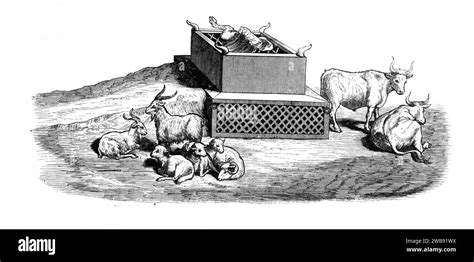
Fast forward to today’s culture. Are we–in some parts of our society–not unlike those ancient people who were always looking for a way to escape life’s daily or stretches of hardships? In every people group known to me, there is a form of religion based on a “god” or a “concept” hoping to find purpose, peace, provision, favor. I think of the account of the prophets of Baal, 450 men under King Ahab’s rule who came against God’s man, Elijah. On Mt. Carmel there was a challenge. Whose God would show up to bulls laid on a wood pile to be offered as a burnt sacrifice? It’s a very intriguing story recorded in 1 Kings 18: 20-40. If you haven’t read it, I encourage you to do so. It’s a gruesome story to say the least. There’s even some sarcasm as Elijah comes out victorious, exposing the falsehoods of their “gods”.

Much can be learned from Elijah’s encounter with false prophets. As believers we also must exercise caution creating our own “gods”. What! Yes, too often we see how professional athletes are elevated to hero status. Some individuals know more about Hollywood celebrities than current events. Political parties and leaders have received more trust in all the areas that belong to God. And, once again, admittedly, as I’ve watched a variety of news interviewers travel college campuses or visit spring break beaches, asking questions of the youth they encounter, ignorance and knowledge is gravely lacking.

In Hosea, another of God’s prophets, he says “My people are being destroyed because they don’t know me. Since you priests refuse to know me, I refuse to recognize  you as my priests.  Since you have forgotten the laws of your God, I will forget to bless your children.” (Hosea 4: 6 New Living Translation)

I don’t want to see people and families destroyed. I don’t want to witness our nation becoming further and further away from Judeo Christian values, teaching, and knowledge. I don’t want to see people forget about God and who He is along with our children losing His blessings. Yet, I do see it. I read about it. I scroll social media and shake my head some days, even wondering if we’ve entered the days described by Isaiah declaring “what sorrow for those who say that evil is good and good is evil, that dark is light and light is dark, that bitter is sweet and sweet is bitter. What sorrow for those who are wise in their own eyes and think themselves so clever.” (Isaiah 5: 20-21 (New Living Translation)

However, as much as I can lament about the negative behaviors taking place in our culture, I also rejoice at the positive revivals happening in churches, especially with our youth. Relying on social media once again, there are numerous accounts of our young folks waking up from lies the world offers, turning to find out who Jesus is, getting back to church, filling their empty hearts and bellies with the truths found in the Bible. When I witness all the excitement and fervor in our youth, I have hope, the kind that is fueled–like Eliajah’s fiery challenge–by a living God, and not from some crudely handmade object that will only rot or tarnish.

If you’re tired, if you’ve been complacent in pursuing knowledge and understanding of who Jesus is, I invite you to return to church or go for the first time. Find out that God is light. He’s sweet. And He’s good.

RESOLVE ‘NOT’ TO RESOLVE

Well, we’ve come to the time of our year when all major holidays are behind us. Christmas decorations will remain in place for a few more days, the anticipation of what’s inside wrapping and stockings has worn off. Bags of trash created from the frenzy of opening beautifully wrapped packages along with remnants from many dinners fill our waste cans or spill over in garbage containers waiting for the next pickup. As excitement over gifts begins to wane, many of us turn our thoughts now to a new year soon approaching, one last flip of the calendar. Ah, 2025–with all its wins and losses small and big–is behind us as we welcome 2026 in a matter of a few days. 

In many households indulging in favorite holiday foods and candy will be replaced with dieting ideas, returning to a somewhat normalcy in daily meals. Some of us will welcome January 1st by making a list of “new year’s resolutions”. Each stroke of our pen brings with them a promise to “stay the course” and not “break” our simple oaths that we make to ourselves.

Just where did making resolutions in the new year originate? If you’re like me, I often wonder the “why” behind practices that people adopt over years. It’s one thing to be committed to taking on a challenge, it’s another to understand the why behind it.

A quick search online showed me that resolutions began about 4,000 years ago in the Babylonian culture. These ancient people made oaths to their “gods” in order to gain favor. Part of their ritual was a commitment to pay off all debt and return items that had been borrowed. What a novel idea!

Now, we make promises to eat better, exercise more, drink more water….our self made goals seem to focus on “self”, the physical aspect of our bodies versus our minds and hearts. While that’s a genuine goal, what if God desires something different than a fit and beautiful toned body? What if He would have us choose to develop and transform our minds and hearts that lean towards Him?

2 Corinthians 10: 5 says  the “We destroy every proud obstacle that keeps people from knowing God. We capture their rebellious thoughts and teach them to obey Christ.” (New Living Translation) True to my nature, comparing different versions of scripture, I like how the Common Jewish Bible states this verse: And every arrogance that raises itself up against the knowledge of God; we take every thought captive and make it obey the Messiah.” Both versions make me say “ouch”, not because the words hurt me physically but rather the strong directives given to me by a loving yet righteous God.

I gave up making resolutions in the new year long ago. Why? Because I’m a failure. The month of January often looks successful in many ways for me until my old habits creep back, luring me into comfort instead of diligence. When I always try to “lean on my own understanding and will power”, I lose my ambitions. This is why I need God. I need Holy Spirit to spur me on much like a sideline coach. I need the words from Galatians 6: 9: “So let us not grow weary of doing what is good; for if we don’t give up, we will in time reap the harvest”. (Common Jewish Bible) The New Living Translation says “we will reap a harvest of blessing if we don’t give up.”

As Christians, we are called to rely on our Father, Who is the One and Only, the King of Kings, a God who told us over 4,000 years ago to “have no other gods before Him.” Man has been pretty good at creating other gods, then finding ways to appease and plead for earthly comforts, thus the example of the Babylonians giving us the idea to make new yearly promises to escape hardship. God’s version of living “with” hardships that are not withheld from our lives is the gift of Jesus Christ, the Prince of Peace who comforts all who mourn. He’s a Mighty Counselor guiding us how to resolve conflict in relationships. He’s Jehovah Jireh, the one who provides. He’s much much more.

So, as we close out 2025 I invite you to throw out the idea of making “new year’s resolutions”. May I suggest that you pick up pen and paper, find a comfortable spot and make a list of all the things you’re grateful for this past year. Then ask God “how can I know You better? What kind of good things can I do to help reap harvests in our families? In our community?”

I promise you that answers will come. God WILL speak to you by the power of His Holy Spirit. If we as true followers of Christ listen, obey, and act…well, think of the blessings that will be poured out on our families and this town we lovingly call “the ‘Ville’”. That’s a harvest I can get excited about!

SNOW ANGELS, JOY & DELIGHT

Ah, fresh snow. That’s what I’m enjoying seeing outside my window as flakes large and small fall, making piles on the ground, covering plants that have long died to summer’s heat and beauty. My mind wanders to all the activities that a good snowfall offers, having read on social media last evening that a friend tried snowboarding for the first time which is quite a feat considering she’s now 40. I actually did the same thing at that age, only it was the smaller hill by Torch 180 and admittedly, although it was great fun, I went down quickly on my behind. I haven’t attempted snowboarding since.

When was the last time you made a snow angel? This simple act of artwork in freshly fallen snow is a favorite among children and well, I have a dear friend very close to my ripe age of 72, who keeps the beauty of snow angels alive. We refer to it each winter as “our own personal challenge”. There’s no pressure to get outside to participate, however, we are required to give “proof of life” by snapping a picture and texting it to one another on our phones. How fun is that! 

Lisa and I are both pursuing living the older portion of our lives without losing our inner child joy. Even though getting down on snow covered ground to make our angel is more difficult than our fond childhood years, we do it. We giggle. We feel each other’s pain when it’s time to get up, trying to do so with as much grace as achy and tight joints allow. As much clumsiness is involved, the end result of feeling joy and laughter on an otherwise ordinary wintry day is worth all the struggles within our effort.

Joy and delight. I read those words in my devotion this Wednesday morning after hearing from Lisa. “Hey, have you made your snow angel yet?”  They’re found in Luke Chapter 1 when an “angel of the Lord” visited Zechariah during his priestly duties to announce that he and wife Elizabeth–in their old age!–would welcome a son, commanding him to name the babe John…”he will be a joy and a delight to you”. What a beautiful description and promise! Wouldn’t all of us as parents love to have a personal word spoken over our babies yet to be born? Actually, we do have a way to speak loving and powerful words over our children!

Proverbs 18: 21 is perfect guidance for us…”the tongue has the power of life and death, and those who love it will eat its fruit”.

I’ve been around some awesome parents who truly encourage and love their children, choosing their words very carefully. Unfortunately, I’ve also witnessed firsthand those who are very harsh with their children, screaming and using obscene language when making minor corrections to behavior. The latter breaks my heart every time. Expanding on the author’s words found in the proverb, later James wrote to us in scripture: “And so blessing and cursing come pouring out of the same mouth. Surely, my brothers and sisters, this is not right”. (New Living Translation)

Snow angels are fun. Messages directly from God’s angel to Zechariah–or anyone for that matter–are powerful and should never be dismissed or go unnoticed.

Zechariah and Elizabeth were old, far beyond childbearing years. But God. There was a plan written long before they were born. From their old age, from their faithful prayers asking for a child, God used their barren years to produce a miracle named John, who indeed brought them much “joy and delight”. More importantly,  John was also considered as “great in the sight of God” and as a man became His messenger who would prepare the Jewish people for the arrival of the Messiah, taking his rightful place announcing the earthly ministry of his cousin, Jesus.

As we think about Christ’s birth that we will celebrate in a couple of weeks, my challenge is this. First, have a little bit of fun and make a snow angel. If you’ve got kids, do it as a family. Second, read about John in Luke chapter 1. Third, be a blessing to your children–and others– by speaking words of “life” and “love” over them every chance you get. 

Words have power. They speak of life, creation, destruction, even death. Jesus’ words brought healing and His teachings show us how to be encouraging and gracious not only to our family but everyone we meet throughout our day. May we all strive to be examples of  “joy and delight” in our homes, workplaces, and community!

WHAT TO DO WITH ALL THE LEFTOVERS

Leftovers.

Thanksgiving 2025 is behind us now. Remnants of family dinners together linger in the form of uneaten turkey or other meats, scrapings of mashed potatoes stuck to serving bowls along with other delicious side dishes we all typically enjoy on this holiday that brings family and friends together around food laden tables.

Leftovers. What to do with all the food that didn’t get eaten? Maybe as the host you fill take out containers or zip lock bags with whatever you can pawn off, saving room in your own fridge for the remainder. Or, if waste doesn’t concern you, unused portions are easily tossed in trash bags that will make it to the curb on your next pickup day.

Leftovers create two camps. One, is made up of those who absolutely love having extra food on hand for a few days, thus alleviating the need to prepare fresh meals. The second is folks who don’t enjoy dealing with the quantity of food that leftovers creates, out of sight, out of mind.

Thinking about leftovers has me reflecting on a time in Jesus’ ministry where leftovers didn’t happen because of an ordinary meal. Rather, an ample amount of leftovers actually occurred from two separate miracles involving a mere loaves of bread and two small fish from a day’s catch.

In Matthew 15, he records about the afternoon that Jesus fed 4,000 people, using seven loaves of bread and a few small fish. Before the meal was given to the people, Jesus gave thanks for the provision. Then, the disciples distributed the food.

In Luke 9 he wrote about Jesus feeding 5,000 people using five loaves of bread and two fish. Again, before the meal was given, Jesus gave thanks as He looked up to heaven.

It’s worthy to note that in both scenes, although we are told 4,000 and 5,000 dined, the numbers were most certainly larger as women and children may not have been counted in the attendance figures. Also–and I believe most worthy to note–is that in Matthew’s account we are told the disciples filled seven baskets with leftovers. In Luke’s account, the guys filled 12 baskets.

Leftovers. Only these were of a different variety than the turkey carcasses and mashed potatoes scrapings we manage today. These leftovers had been blessed by the Master’s own hands and although considered as remainders of a meal, all words of thanksgiving and blessing lingered in permanency.

I find–in curiosity and amazement as I read these accounts–that Jesus not only fed hungry bellies, He allowed there to be leftovers. I have to ask myself “why”? What was His purpose?

I think He did this to extend the astonishment of the miracle. I also think He was continuing to show His disciples the level of power He possessed to turn ordinary things into something of great benefit. In these circumstances, He and the disciples were faced with thousands of hungry families and by using a very small amount of food–insurmountable odds by human measure–He satisfied empty stomachs and opened spiritually empty hearts and eyes to the glory and wonder of God!

Digging deeper into the meaning of our 7 and 12 baskets of leftovers has significance, too. In Hebrew the number 7 represents completion, perfection, and divine intervention. The number 12 refers to a perfect government. God established 12 tribes in Israel. The gates and foundations of the New Jerusalem number as 12, and Jesus chose 12 disciples which revealed the rule and authority of Himself.

Pretty interesting leftovers. Even in what may be considered as food suitable for a takeout container or filling a trash bag by today’s measure, Jesus used the opportunity to teach further lessons beyond the mere satisfaction of a full belly.

Another interesting phrase–and don’t miss this–as Jesus took the bread to feed the multitudes, along with giving thanks He “broke” it while praying. Where do we see this again in His ministry? At the last supper with His disciples. “He took bread, gave thanks, and broke it….”

What do you think went through their minds as He spoke these words during a passover meal with them? Do you think they had an a-ha moment? Hey, remember when He did the same thing a short while back with some bread and fish? Human nature tells me they most certainly recalled those miracles. Were they able to also remember when Jesus described Himself “as the bread of life”?

Certainly, they would face a near future reality that His body would literally be “broken” as He hung on a Roman cross.

Leftovers. I hope you won’t think of them the same way anymore. I hope you’ll fill takeout containers with excess food and share with someone who needs a bit extra between paychecks. When you sit down to a meal, I hope you remember to first give thanks. You don’t necessarily need to “look up to heaven”, although it’d be a beautiful act of worship if you did, but assuming a posture of gratitude for provision and abundance reflects a satisfied heart. And a full belly.

CAN YOU HANDLE THE TRUTH?

One of my favorite sayings is “there’s three sides to the truth, my version, the other person’s perspective, and that of God”. Especially when actively listening to two different people describing a problem (think marital discord) there’s “her side”, “his side” and then the absolute truth–”God’s side”. Because I believe that He is an all knowing God, sifting out truth in the course of resolving conflict can be tricky. Which leads me to my own slight disdain at popular phrases that have popped  up in our culture which steer people completely away from God’s truth.

Here’s a few examples of words that sound good, tickle ears and totally distort who God is and what He desires for us.

“God loves you and accepts you as you are”. While the basic truth IS that He DOES love and accept you, He also calls us out of sinful activities into pursuing a heart of repentance. The simple truth of the matter is that God loves us TOO much to allow us to live in ways that dishonor Him. In my reading this week, I found evidence of this desire in 1 Peter 4 where Peter’s words to early Christians he was writing to reminded them “you have spent enough time in the past doing what pagans choose–living in debauchery, lust, drunkenness, orgies, carousing and detestable idolatry. Remember, early Christians were living in Roman culture which embraced every activity listed above. Furthermore, Peter reminded his readers that although man would judge all behavior done in the body, it will be God who judges the soul.

“Follow your heart”. These three words are very dangerous. The prophet Jeremiah warned us with these powerful words “The heart is deceitful above all things and beyond cure. Who can understand it?”  We need look no further than King David who actually serves as a very good example of following his own heart. He lusted after another man’s wife, took her as a lover and later as wife, had her husband killed in battle to cover up a pregnancy. By human standards David should not have been elevated as King or described as “having a heart after God”. But–David came to a place of deep regret and repentance. Assuming humility did not save him from consequences–one of which was the death of a son–yet, God loved him enough to continue pouring into his life in order to be the leader over God’s people. Often–without sounding trite–God’s ways don’t match ours–but that’s why He’s the final authority and we in our selfish desires are not.

Good people go to heaven”. By nature, we humans don’t like suffering. Pain and trials that crush hopes and dreams are too much to bear at times. We want comfortable lives and we’ll do anything sometimes to achieve harmony and success. Along the way of chasing “the good life” many through countless generations have pushed God aside, filling empty hearts and longing emotions with all the world offers–success, status, wealth, relationships that don’t last, drugs, alcohol, pornography, over spending, fighting to maintain position in a “dog eat dog culture” that doesn’t include God. Then, at the end of life, when last breaths are taken and loved ones surround a casket or urn, we hear “he’s in a better place….”

Paul, who wrote the book of Romans, is quite clear when he wrote that …”for all have sinned and fall short of the glory of God”. Ruminate for a moment on that tiny word “all”. What does it mean? All means all. Not a few, not some, not those who are special or excused. All. 

So, quite honestly it all means your loving grandmother who never said a harsh word her entire life, but never spoke of God as having a relationship with Him. She didn’t need to attend church. She didn’t need God telling her how to live. Someone she believed that by being “good” she would go to heaven.

Compare her to the most evil person you can think of. Who came to mind? Hitler? Stalin? Ted Bundy? Jeffrey Dahmer? Those four men are included in our tiny word “all”. By human standards which measure their respective atrocities they should certainly be excluded from God’s mercy and gift of eternal life in heaven, right?

Here’s the complexity of those who go to heaven and those who don’t. Even though bible writings are pretty clear about this topic, it boils down to God’s judgement and a person’s actions  when taking final breaths. Personally, I don’t have any resources telling me what Hitler and Stalin decided on their death beds. However, I’m old enough to remember the horrific deeds done by Bundy and Dahmer and while inexcusable, both men chose to repent of their sins and came into relationship with Christ. In Dahmer’s case a man named Roy Ratcliff ministered to him while incarcerated. Ratcliff met with Dahmer, teaching him scripture, baptizing him while in prison. Dahmer was later murdered by another inmate which doesn’t justify any wrongs by any sense of the word. 

So, should we excuse people’s choices and behaviors simply because “that’s who they are?”

Should we risk following sinful hearts to satisfy sins of the mind and flesh because we don’t want to live surrendered to an almighty God?

Can we understand the complexity of life and death–knowing that none of us are “getting out of here alive” is reality, and that there are two places of eternal rest. One has been prepared for we who embrace Christ’s sufferings on the cross as payment for ALL sins. It’s called heaven. The other–a place of total separation from God–commonly called hell is a second reality. The latter is not a place I wish on anyone, no matter their level of depravity or outright rejection of all that is good…God’s deep abiding love for everyone to not perish.

I leave you with these beautiful words penned by Peter: “Praise be to the God and Father of our Lord Jesus Christ! In His great mercy He has given us new birth into a living hope through the resurrection of Jesus Christ from the dead and into an inheritance that can never perish, spoil or fade–kept in heaven for you…”

Be careful what you take as absolute truth. Be mindful of careless living. Be aware that God’s salvation is for everyone, but it’s not an automatic gift He gives. It’s a partnership He’s waiting to establish with you between Him and His Son, Jesus Christ. 

Maybe we all could learn something from Roy Ratcliff, too, be willing and available to minister God’s truth to those we often prefer to “judge” according to the sins of their bodies, forgetting that there’s a “soul” inside that will is bound for one of two resting places.

TAKE OUT THE TRASH!

My husband and I have been watching an older series on television written and produced to showcase individuals who have adopted living a “hoarder” lifestyle. If you’re not familiar with the term it basically means folks who have created stockpiles of stuff either in their yards or inside homes. In most cases, any space on their property has become a place to stash and store their possessions. There’s a variety of styles that are used to accumulate the “stuff”…there’s the people who pick through someone else’s junk on trash day, purchases of new merchandise at stores or a thrift shop, an inability to throw out old items including daily common trash created from cooking meals, etc. Some of the episodes we’ve watched have revealed some pretty disgusting living conditions pertaining to rodent and insect infestation, unusable bathroom facilities, rotting floors, walls and ceilings from lack of proper maintenance.

As a viewer who is outside the situation it’s been easy to get frustrated and angry trying to comprehend how a person can get swallowed up by a hoarding lifestyle. My own frustrations are often echoed by family members, therapists and cleanup crews who are brought in to help a homeowner declutter property and home in order to rebuild habits that lead to a new healthy living environment. Usually the allotted time devoted to each project is 3-4 days, all intense work as rooms are unpacked, sorted for trash or possible donations.

We watch as the “hoarder” begins the cleanup journey with 100% enthusiasm, fully cooperating as their “treasures” begin to get packed, tossed into trash bags which pile up dumpster after dumpster. I think the worst case I’ve watched so far is that of an elderly woman who lived in a mansion and I kid you not–every room was packed full of stuff she had collected. Some of it began as a home business as an interior decorator but over time a shift in her brain caused a need to buy, buy some more, and never throw anything away.

We’ve also noted that in each person’s life chronicled in this series, some form of trauma in their life altered their behavior. Folks with normal common sense for daily living slowly adopted over buying, over keeping, not cleaning their home with regular routines only to find themselves surrounded, held captive in mountains of “stuff”. Sadly, their mental health challenge blinded them from unhealthy living conditions until an intervention was initiated by family and friends. By day 2 or 3 of the cleanup, cooperation is usually exchanged for denial, anger, and bartering to keep useless “stuff”. It’s sad.

As I’ve watched each episode I’ve witnessed how a therapist works with the “hoarder” to find the source of trauma, address it, and begin to gently admonish and teach new thought patterns to change their brains. I’m not sure if anything is scripted or if what we’re watching is pure raw conversations, but it’s very enlightening how trauma or believing a lie causes hoarding behavior in people.

Likewise, in the Body of Christ–those of us who follow Christ and meet together weekly in our church settings–bring a vast variety of hurts and habits with us. Together, we’re a hot mess. Some of our behavior was our own fault, others fall into the category of “sin against us”. In either case, Christ offers hope.

 “The one who does what is sinful is of the devil, because the devil has been sinning from the beginning. The reason the Son of God appeared was to destroy the devil’s work.” (1 John 3:8)

Furthermore, in Mark we read more about why Christ came: “ When Jesus heard this, he told them, “It is not those who are well who need a doctor, but those who are sick. I didn’t come to call the righteous, but sinners.”. (Mark 2:17)

In our ministry at Celebrate Recovery we deal with hurts, habits and hangups. We come alongside men and women who have lived lives filled with trauma. Unlike a TV program produced for educating and exposing a person’s hoarding lifestyle, we minister with Christ’s love and scriptures to reset brain patterns, launch healthy spiritual growth, and “cleanup” emotional baggage that has held people captive instead of living a life of freedom available through Christ. Unfortunately, the work in Celebrate Recovery is not limited to 3-4 days, but rather can take a lifetime of consistent hard work laying aside stinkin’ thinkin’ and giving full surrender to Jesus Christ as the only higher power to bring change, renewal, and hope!

So, does your life reflect that of a hoarder? Is there a deep hurt or a nasty habit holding you captive? At Celebrate Recovery we’d love to introduce the 12 step process that unlocks the door to your cell. We meet every Tuesday, 7 pm at Fowlerville United Brethren in Christ Church. For more information, call 517.223.9490.

What do you have to lose if you step out of your misery to seek a better way? Probably tons of unwanted “stuff”! 

PUMPKIN SPICE OR APPLE?

Ah, the arrival of October, and with it panoramas of leaves changing color before falling to the ground as their annual life cycle enters winter’s rest…temperatures begin to cool as we say goodbye to long days under sunshine…football and soccer games highlight our weekends…and a favorite of mine–trips to orchards to purchase apples!

The beauty of fall also has birthed a lighthearted debate popular on social medial–are you a “pumpkin spice or apple kind of person?” Billboards for our prime coffee shops lure us with extravagant flavors that reflect our love for “everything pumpkin, apple, etc.” Recently I saw a billboard featuring a new beverage with maple syrup as part of the mixings. Yum. Now there’s a third flavor in the competition!

So, which flavor is your “go-to”? If I had to choose one–pumpkin or apple–I honestly could not. I asked this poll question in a group of children and adults in church and to my delight several folks answered “it depends on what we’re talking about”, meaning is it in a beverage? A bread? A pie? That’s my position, too. If it’s a beverage, I lean towards pumpkin spice. If it’s a pie, I prefer homemade apple. Both satisfy my taste buds as I enjoy the bounty of fall harvests.

“Taste and see that the Lord is good; blessed is the one who takes refuge in Him.” (Psalm 34: 8) 

Blessed. It’s a common word used in Judeo Christian conversations. I learned this past week that the Hebrew word for “blessed” expands to mean “divine favor” and “joy fulfilled”. These gifts come from a divine being who is God. For the Jews He is the God of Abraham, Issac and Jacob. For Christians He is the triune God–God the Father, God the Son, and God the Holy Spirit. 

“The one” who is blessed are those “who take refuge in Him”. By refuge the psalmist means “a shelter or place of protection”. Seeking refuge creates images in my mind as a need to run from stormy circumstances to find a safe place until trouble passes.

We all face trouble in our lives, some more harsh than others. What’s beautiful about God is no matter what we are facing, He offers us a safe place in the shelter of His arms…under the shadow of His wings. A common Psalm–number 23–is one often read at funerals for our loved ones. Simply put, this psalm tells us that God cares for us, He meets our needs ahead of time, and we can find quiet rest in His arms. 

Pumpkin spice or apple. Restlessness or rest. Worry or confidence. These and more are worthwhile choices to ponder. Life is full of choices–some that are fun and create light memories–while others more serious decide the path we will follow. I think that Psalm 1 gives us important insight as to which path God desires for us: “Blessed is the one who does not walk in step with the wicked or stand in the way that sinners take or sit in the company of mockers, but whose delight is in the law of the Lord, and who meditates on his law day and night.”

Do you need to know more about God? I’m always available to chat with you about a relationship with Him. You can email me at celebraterecovery@gmail.com. We can chat over anything pumpkin spice or apple….your choice, I’ll buy.