HOW DOES YOUR GARDEN GROW?

My novice gardening skills teach me a lot about life in general and when I reflect into a deeper spiritual aspect of daily circumstances, I gain further insight.

This morning, in the coolness of early temperatures under beautiful sunshine and blue skies, I watered a variety of plants on the west side of our home as they are still under shade until the sun moves and lights up the area. We’ve got a few shrubs, some perennials, ground cover and annuals across the front of the house. As I watered I could see where heat damaged a few of the plants. Some are missing flower buds thanks to a bunny or deer. Missing potential blooms makes me sad. Afterall, the reason for planting them was to add color to our home and for personal enjoyment. The shrubs are a bit misshapen due to deer munching on their branches. A couple annuals appear pushed up from level ground, maybe a mole or chipmunk. The butterfly bush always appears unscathed and has a perfect shape as its branches climb higher; our own pruning each year seems to be a key care factor!

Not to be ignored, are the perennial “weeds” that always show up each year. There’s plenty of wild carrots scattered among the plants. Poison ivy is relentless and pops up unexpectedly each summer. Thankfully, my husband has a keen eye for this unwanted vine and takes great care to rid it from our yard.

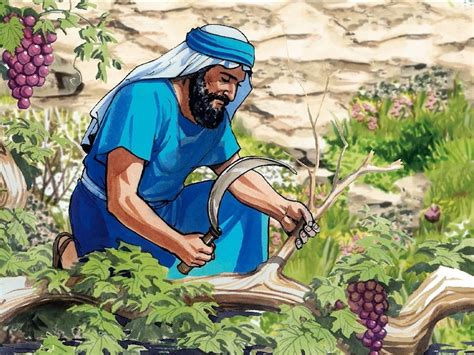
In John 15 beginning with verse one we read “I am the true vine, and my Father is the gardner. He cuts off every branch in me that bears no fruit, while every branch that does bear fruit he prunes so that it will be even more fruitful”. Who is the true vine? It’s Jesus. In this parable He refers to the Father as the “gardner”, the one who tends to the branches on the vine. In application to you and me, God tends to our lives, too.

He desires for you and me to live and grow enjoying an abundant life. To accomplish this, He offers protection from the evils of the world by surrounding us with a hedge. He feeds and waters our spirits when we read scripture on a daily basis. When we begin to grow tired, spindly instead of well rounded fullness, He comes gently to prune away “dead” things that hinder healthy growth. Before “someone” or “something” can come along to snatch our joy, destroy what’s about to bloom in our lives, He offers protection. When we walk on unlevel ground, He’s quick to come alongside and gently nudge us back on a good path.

I’ve lost some plants this year. Some annuals didn’t make it either by my own doing, weather, or critters. Others, like the tomato and cucumber plants appear to be thriving, covered with blooms that will turn into luscious fruits in the coming weeks. Their ability to grow and flourish makes me happy. Periodic watering along with checking for bugs who enjoy eating vegetable leaves, is crucial to their success.

Staying connected to God is vital for you and me. This is why reading and studying scripture regularly is important and although doing so enriches us personally, what we read and learn is the task of telling others about Christ. Research shows that almost 57% of Americans do not attend church on a regular basis. While I might assume that our pastors would love seeing every pew or chair filled every Sunday, the greater desire is that more and more people come into a relationship with Christ. Each believer becomes a number in man’s eyes, but to God every person walking in salvation has their name written in the Book of Life. (Revelation 20:15) God’s goal isn’t to fill churches with people merely to offer bragging rights regarding attendance; His desire is far greater with the filling of His Kingdom with redeemed souls.

Plants suffer fate due to a variety of conditions. Some bloom even though they’ve gone through stress. Some fight for space among unwanted weeds or other overgrowth. Others display damaged leaves from being munched on. Most will survive and offer vibrant colorful blooms until their season comes to an end. People are resilient, too. Many of us have lived through tough seasons, losses of family or jobs, unexpected attacks when our guard is down. This is why we all need Christ. We all need His Father. Both offer a world where we can choose to be connected with them and reap the benefits of being cared for by a faithful shepherd. 

Here is a trustworthy saying that deserves full acceptance: Christ Jesus came into the world to save sinners–of whom I am the worst. (1 Timothy 1: 15)

Who are the sinners? Every person from time’s beginning, present, and future. In God’s math that’s 100%, yet according to man’s statistics, over half of Americans have or continue to reject Christ. That’s a loss that bears attention and great care no matter the cost.

4TH OF JULY, A LETTER 

Dear Dad:

In our great nation of 50 states–America–we will celebrate 250 years of “freedom”, commemorating the American War of Independence many years ago in pursuit of being released from British rule. It seems being taxed heavily without having a ‘voice’ regarding its revenue rubbed early inhabitants of our beautiful country the wrong way. Many hard and gruesome battles were waged, yet strong and determined men–many of them mere teenagers–fought valiantly and in harsh conditions to gain victory for a passion woven by deep threads of unity in their hearts, minds, and souls. Much has changed in a young country established as a sovereign nation who founded herself with a Declaration of Independence penned by a committee of five men and later signed by 56. Thus, America was birthed and began further growth and establishment among great nations of the world at that time … .and much has changed.

Today, I’m imagining writing a letter to my dad whose been gone since 2012. At age 90 he lived through his own hard years, the Depression Era, World War II and the Korean Conflict. Either of those events could have claimed his life. Thankfully he escaped severe sickness and even death. Reflecting on his life–and the life of America–has me wondering the depth of conversation we’d have regarding his experiences in America compared to these mere past 13 years he’s been gone, where admittedly, indeed much has changed and in full disclosure–not everything has been in a positive direction.

As July 4 rolls around for the 250th time since the first celebration of being severed from British rule, although parades and fireworks abound from coast to coast, is it possible that hot dogs in backyard barbeques, sparklers in the waving hands of children, businesses open as usual on this grand holiday detract from the significance of this day that I believe was a miracle in the making? 56 men embraced being courageous by signing a document that resulted in them being designated as “treasonists” by the British Crown,  with most of them ending up living in poverty from having their property and estates destroyed during the conflict.

Dad, I fondly remember how you loved singing all the great patriotic songs that have been composed about America. “America the Beautiful” was one of your favorites. I remember being taught this song in grade school, too. This and songs like it were a major part of our music curriculum. Until today, I did not know it was originally a poem written in 1893 by Kathleen Lee Bates after she had taken a trip to Colorado and had climbed Pikes Peak. Imagine her awe and wonder as she gazed across such beauty. Thankfully, her verses tell us of the majesty and beauty captured by her eyes. Sadly, dad, I’m not sure these patriotic songs are being taught in music classes now. 

And how about our national anthem, dad? Written in 1812 by Francis Scott Key as a poem after his witness of a 25 hour bombardment against Fort McHenry by the British, he saw our flag still flying amidst the ashes of battle. It’s a song that has been sung with many variations at all kinds of events, remains revered by most Americans, yet within a few recent years, deeply disrespected as though honoring the legacy of America’s history outweighs freedoms July 4th ushered in for all fortunate to be alive….Sadly, dad, I’m not sure our children know all the words to our anthem.

I can still see you when your hand was placed over your heart when the anthem was part of an important event. In addition, there’s memories of learning the Pledge of Allegiance that I recited every morning in grade school. By junior high this practice disappeared. Until today, dad, I didn’t recall that the pledge we now recite originated in 1892, composed by a Baptist minister, Francis Bellamy.  Go figure, dad, a ‘man of the cloth’, who was trained and educated to serve one God and one kingdom, penned words in support of being in full support of America. The pledge had a few revisions to it, and in 1954 President Dwight Eisenhower encouraged Congress to include “under God” in the wording. Wow, dad, I was one year old when he did that. Now, at age 72, I wonder if all our school children are being taught the pledge let alone reciting it to jumpstart a new school day.

As you can see and read, I’d have a lot to talk to my dad about regarding July 4. By no means am I an adequate student of American history. Thank goodness for easy access to online research using internet resources to revisit topics and facts that have long escaped my memory from all teachers tasked with instructing me on American history, leaning heavily on emphasising tremendous dangers and sacrifices by brave men and women to give us a great nation–not perfect by any means–yet still a country that people from other parts of the world still want to come for a chance to thrive and live in a style of “freedom” that once was foreign to many and now at great cost by those who take advantage of its benefits.

But, dad, as much as you and our family enjoyed many 4th of July celebrations together, there is but one kind of “freedom” that overshadows that which was gained by over 25,000 American deaths. With One death, about 2,000 years ago, One man crucified on a cross, gave His life with shedding of blood that dripped down a beaten and tortured body, so that mankind could be “free” from sin’s penalty. He didn’t choose to enter the battle. He did so under great pain of obedience. He accomplished a promise and new covenant spoken by His Father. 

Thousands of hymns and songs have been written honoring His accomplishment. For many years churches, schools, universities, military choirs have sung these great compositions. Sadly, dad, our halls of great learning are becoming a different kind of quiet as the secular approach to instruction has pushed God out of daily instruction. Is it possible, dad, that our “one nation under God” can prevail? I wish you were here to encourage me that it can, if we were to humble ourselves before Almighty God and seek Him rather than the desires of our own selfish motives, we stand a chance of prevailing.

Dad, thank you, for teaching me about being a patriot, loving an imperfect country, but above all, surrendering my life to an ALL PERFECT God, the One Who had His eyes on brave men and women 250 years ago….the One Who watched as His Only Son carried out your plan of salvation for mankind. Even when I don’t understand what I see and hear in today’s headlines regarding America, I still have hope. Even when I don’t comprehend what I perceive as God’s silence in all of our struggles, I am grateful for my freedom…first and foremost that which comes from God…and secondly from a 250 year old concept birthed in the minds of brave men and women.

Dad, part of me longs for my childhood days when I sat on your lap, ears covered, to be shielded from the loud fireworks display we enjoyed as a family. Now, I long for the day we will be united in heaven where we will sing worship songs together, honoring Christ. Hopefully we’ll get to belt out a rendition of “America the Beautiful”, too. Somehow I don’t think God will mind…

FATHER’S DAY & GOD’S GREAT LOVE FOR YOU

Happy Father’s Day to all the men who are in this role as a parent whether you’ve had children of your own, through adoption or blended family, even mentoring through many programs that target improving the lives of our most valuable resources–our children.

You’ve read many of my articles which have highlighted memories and insight I hold dear to me regarding my own earthly father. I was blessed and fortunate that God gave him to me and wired him to be gentle, loving, kind, faithful to my mother and our family. He possessed a work ethic to be admired and a love of country often reflected by his wanting to sing all the patriotic songs when we were together as a family, especially as age and dementia robbed him in his later years. In fact, as a tribute to him at his funeral, we sang “America the Beautiful” as one of the songs, a favorite of dads. I have nothing but good memories when I think about my dad.

Yet, sitting here this morning to write about Father’s Day, I cannot acknowledge that not everyone has had or is in a healthy relationship with an earthly father. The fallout of a disjointed or broken relationship  often reflects how one views God, making it difficult to refer to Him as “Father”, seeing Him as a good good Father versus one who is always angry or one who seems cold and distant, not interested in a hurting child or adult’s life. Nothing could be further from the truth. And to understand God’s deep affection as a Father we need look no further than the Lord’s Prayer.

In this prayer that Jesus taught to His disciples, He began with two words…”Our Father.” With the help of a teaching from a favorite ministry site–”Walking the Text”*–I unpacked some key takeaways that gave me deeper revelation about this prayer most of us know and which is used in churches worldwide. 

The word “our”–as used here–is communal in meaning, indicating that “we” join God and others when we say “Our Father”. We enter a much bigger story than merely our own. God invites us into His story which involves over 8 billion people around the world.

Furthermore, God is for all people. “Our Father” is family language. It’s intimate. The Jews in Jesus’ days would have understood this language. They had the Old Testament scriptures that established understanding this intimate relationship. In the Book of Exodus we read the account of Moses being sent to Pharoah by God to get His people out of slavery. Moses was instructed to tell Pharoah “This is what the Lord says: Israel is my firstborn son, and I told, “Let my son go, so he may worship me.” Later, Matthew recorded the events when Joseph took Mary and Jesus to Egypt to escape Herod’s murder plot against the Christ child. “Out of Egypt I called my son.”  In a passage from Isaiah Jews would have read “but you are our Father, though Abraham does not know us or Israel acknowledge us you, Lord, are our Father, our Redeemer from old is your name.”

So, there’s a lot going on when Jesus instructs us to pray daily the Lord’s Prayer, opening our time with God by addressing Him as “Our Father”. Though we cannot “see” God we need look no further than Jesus in order to comprehend who He is for us. John recorded for us Jesus’ own words: “If you really know Me, you will know my Father as well. From now on, you do know Him and have seen Him.”  Later, in Hebrews we read “The Son is the radiance of God’s glory and the exact representation of His being, sustaining all things by His powerful word….”

Maybe you have or had a wonderful earthly father like me. Perhaps the opposite is true. But this is what I know…God IS a good good Father and whether you were born into a family of faith, came into relationship with Him late in life, or you’re still questioning His goodness because of deep hurt and preconceived thoughts, He is still for you and not against you. You can be part of His story, too. All it takes is a humble and willing heart to step out of pain or anger, into His circle to hear of His deep abiding love for you as expressed by the psalmist in chapter 2. “I will proclaim the Lord’s decree: He said to me, ‘You are my son; today I have become your father.” (vs. 7)

I love when scriptures connect the dots..from old testament accounts and prophecy…to the very lips of Jesus sitting as He taught His disciples a new way to pray, relying and bringing to their minds  old truths familiar to each one of them.

—-

*I relied on a teaching on The Lord’s Prayer from the ministry “Walking the Text”. You can find them on YouTube. I highly recommend their team of teachers who bring scripture to life in ways that expose the depth behind contexts too often overlooked or misunderstood. 

DAILY BREAD, LIFE’S STAPLE

Drive down any country road now and chances are you’ll see recently popularized “small farm stands” in a front yard close to a homeowner’s driveway. These quaint cute structures come with all kinds of pretty motifs to attract our eyes…some are rudimentary in nature while others are quite lavish. Neatly arranged shelves are offering homebaked goods–primarily sourdough breads–jams and jellies, farm fresh eggs. There’s no need for the stand to be “manned” with someone to collect money, today’s technology which says “there’s an app for that” has taken out all manner of inability to pay without cash. Venmo QR codes neatly posted on a piece of stationery eliminates person-to-person payment. Grab what you want from the stand, pay via using your smart phone and be on your way! All that’s truly left in the mix is complete honesty to pay for what you’re taking. In other words, the good ole honor system.

Who doesn’t like bread? I know that I do. I grew up with a mother who didn’t  enjoy making bread, however, a fair share of wonderful small bakery owners benefited from her regular weekend visits. A favorite was Miller’s Bakery on State Street in Saginaw. Mom could purchase a variety of rye or pumpkernickel breads along with a standard loaf of white. Or, she could buy Spatz’ bread at our local grocery store. This latter bakery is still in business in Saginaw. The original building looks much the same as it did in the 50s and 60s; the recipe hasn’t changed nor the waxy paper that holds each precious loaf. If you haven’t eaten a slice of Spatz bread you haven’t lived. Toasted or made into a sandwich–the best is egg salad or a BLT–your taste buds will explode. Soft at first, if not used within a few days, you best turn it into a bread pudding as its moisture has slowly dried out or create a french toast breakfast. No one wanted their Spatz bread to go to waste, it was too good.

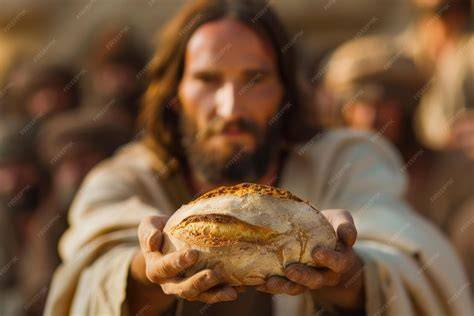
Reading through the gospels we find a few instances where Jesus miraculously fed thousands of people with only a few loaves of bread. A couple of times He had several fish, too. Before “breaking” the bread, He held it up and thanked His Father for providing it, and then had the disciples distribute chunks of the blessed meal to the people. Men, women and children each were fed and I have to believe their bellies were adequately filled. If providing a meal to thousands of people isn’t enough of a miracle, further reading of these accounts mentions that the disciples “gathered the leftovers, filling baskets”. No reason or explanation is given as to why there were portions of bread left unwanted. Furthermore, no indication if the bread was kept for another day or used up within a day or two.

In the Lord’s Prayer, we are instructed to ask God to “give us this day our daily bread”. Why would that phrase have resonated with the disciples and other Jews?  Jesus was purposefully triggering their minds to remember when God delivered their ancestors out of Egypt and when the people cried out to God for food He gave them “manna from heaven”. The children of Israel ate manna for 40 years! Manna was a supernatural provision which sustained them while wandering in the wilderness. (Exodus 16: 35) There was one strong stipulation about the manna; they were told not to store it, gather it daily in the early part of the morning when it appeared on the ground, eat and do the same every day.  Those who disobeyed soon found out that stored manna was a breeding ground for worms as well as rotting.

Their hoarding was an act of disobedience. Daily manna taught the importance of relying on God for daily provision rather than hoarding for the future. 

Jesus “broke” a few small loaves of bread to feed hungry people. The next time His twelve disciples witnessed another “breaking of bread” under supernatural circumstances was during their last supper together. Up until this time they’d heard Jesus refer to Himself as the “bread of life”, His miraculous feeding of thousands with leftovers, and now, using “bread” to establish an allegory to describe His broken body which would be crushed under the weight of crucifixion, all events they had no comprehension of as they reclined around their passover meal.

At the end of Jesus’ last meal with His closest friends, many shared experiences from about three years of ministry filled their minds. Bread–an important staple in their diets”–has gone from filling thousands of bellies with miraculous assistance to becoming a symbol to remember Jesus’ broken body. It was a command that now became an opportunity for obedience. Just as they gathered up “leftovers” on hillsides, now they would become voices of the gospel message, telling others about remembering Christ when “breaking bread”.

The next time you sit down to enjoy a truly great slice or hunk of bread, take a few moments to thank God for all that He provides. A variety of common ingredients of wheat or rye, mixed with yeast and water, shaped and baked into small or large loaves, is a delicious addition to any meal. Breathe in delectable aromas of freshly baked bread just out of the oven. More importantly, as you bite into your lil slice of heaven, thank the One who gives us daily bread…over and over again. 

Sometimes there’s leftovers. That’s God’s bounty. That’s evidence of His ability to provide. 

WHAT’S IN YOUR BOWL?

Years ago now, back in the 90s, I had the privilege of serving on our local school board. It’s a seat I held for eight years. I learned a lot during those monthly meetings as well as volunteering one day a week in one of the junior high classrooms in order to be with students. Because of my personal involvement I was able to attend a student assembly where we listened and learned about canine units in police departments, specially trained dogs to sniff out drugs, bomb materials, etc. The fact I am able to recall that day all these years later is an indication of the impact new knowledge had on me. 

We–I–learned that these dogs are trained to root out one particular smell; they have the ability to ignore all other scents in their immediate surroundings. The example the trainer gave us was this…imagine making a batch of chocolate chip cookies. In the bowl you put the flour, butter, eggs, sugar, chocolate morsels. When the cookie is baked and we inhale their sweet aroma our noses are taking in the aroma from ALL the ingredients. To the dog, he is able to smell each individual ingredient….thus if he’s trained to sniff out marijuana he may walk right past another type of drug because that’s not his target. 

The trainer’s baking illustration has stuck with me, not only as information stored in my memories, but has also served now as an image of looking at life, especially for those of us living as Christ followers.  Jesus stated that …”I came that they might have life, and may have it abundantly”. (John 10:10)  Who is the “they” He’s talking about? It’s you and me.

There’s no argument that life is hard. Each one of us will suffer losses whether it’s a job, rejection from a school we applied for continuing education, the death of a loved one, losing all our assets or material possessions…loss takes on many definitions. Each loss–even joyful moments–go into “our bowl of life”. Each one is like flour. Alone, it has no flavor. It represents those bitter moments or circumstances of life. Sugar is sweet and is easily tolerated when tasting. Its sweetness reminds us of all the good things that happen for us. Raw eggs aren’t the most appetizing, but when mixed in with the dry ingredients, they bind them and create the right reaction for dough to stick together and rise under the oven’s heat. Our “bowl of life” holds the very abundance Jesus talked about as recorded by John. Notice He didn’t tell us our lives would be “perfect”. No, in the reality of this world He promised great “abundance”, that no matter what comes against us, He’s got us!

For myself, the end of March is hard for me. The days between March 21 and 24 are bittersweet. They are the dates my parents died, though years apart. Mom died on the 21st and we buried her on the 24th. The 24th was their wedding anniversary date. Dad died on the 24th. It seems God chose to end their stories on earth in a very tender way to show His compassion and plan. At least that’s how I’m choosing to see it. Within just a few weeks every year, Easter comes on the tails of their death dates, causing my emotions to combine sadness from still missing them to being layered with the joy of the Resurrection of Jesus. I’ve learned that rather than trying to dismiss the sorrowful emotions that creep in, to embrace them and stir in everything good, too, for I know that this is the reality of my life. I am able to allow moments of grief, yet remain joyful. This is abundance.

Next year at this time, I will most likely still experience brief moments of grief again when those March dates roll around. Easter 2027 will come and with great joy I’ll be able to reflect that on Easter weekend 2026 a young grandson became more confident on a two wheel bike with no training wheels and our youngest granddaughter, age 6, chose to be baptized in her church. 

I don’t know what your “bowl of life” is accumulating. What I do know is that when we allow Jesus to be the one guiding and providing for us in our lives, everything will be just fine. Living as Christ followers does not give us a perfect life by any description of the word. Following Him gives us a person to cry out our grief and applaud our mountain top experiences. He is able to take ALL the single, bitter, sweet, raw circumstances of life and create something good! 

GOD’S COMPASSION IN A DARK WORLD

Of God’s many characteristics one that stands out to me the most is His depth of compassion. Throughout the Old and New Testaments of the Bible we read about circumstances of mankind, the kind that were full of troubles, disobedience, and hardship, where God remained faithful and compassionate towards the very people making choices contrary to His commands.  We see this kind of compassion in how He responded to the Israelites under the leadership of Moses, their times of disobedience and rebellion (Exodus 34) and later in the words of Isaiah the Prophet, (Isaiah 49: 15)

Our English definition for the word compassion is a “deep awareness of the suffering of another by the wish to relieve it. In compassion, looking at the Hebrew word racham it’s expanded to a “sense of deep tender love akin to a mother has for her child. In the New Testament we find the Greek word oiktirmos which is defined as emphasizing mercy and pity. 

I was very fortunate to have a dad who truly displayed God’s character of compassion. My dad had his moments of misguided pride, however, over all he was humble, kind, generous, and importantly to me–slow to anger. As a mouthy rebellious teen I needed his ability to remain calm and reel me in when my emotions took control of my own displaced anger and wanting things my way. How he was able to remain calm, not raise his voice at me in heated conversations remains a mystery to me.

Another mystery I’m constantly trying to solve is how long God will continue to grant patience and withhold His anger from the depths of evil that lives in pockets around our world. We have reports of Christians being slaughtered in Nigeria, over 30,000 Iranians killed because of their protests, human trafficking being at the highest level in the United States compared to other countries, especially for sexual exploitation. That fact alone sickens me. The top five countries whose population engage in porography use are: United States, United Kingdom, Germany, Japan, Brazil.  In the US alone this industry  has amassed $13 billion annually (source: worldmetrics.org) And now, across the United States we are witnessing increased opposition to authority, tension between our party system, senseless killing in the streets and at our places of schools, business, or entertainment. So, I ask, “where has our compassion for each other gone? And again, “God, how long will You tolerate our levels of evil…when will Your compassion give way to justice for the sins we have committed?”

In his gospel Matthew wrote about a “need for workers”. We read: “Jesus traveled through all the towns and villages of that area, teaching in the synagogues and announcing the Good News about the Kingdom. And He healed every kind of disease and illness. When He saw the crowds, He had compassion on them because they were confused and helpless, like sheep without a shepherd. He said to His disciples, ‘The harvest is great, but the workers are few. So pray to the Lord who is in charge of the harvest; ask him to send more workers into his fields”.

A key take away from these verses is how Jesus reacted to the crowds and why. He saw their confusion and being helpless. This is during a time in His ministry where He’s been traveling, He’s in one area and this is what He observes. As the second person of the trinity we know He ascended into heaven to rejoin the Father and is now seated on His throne. Together–with omniscient power they have universal knowledge of all things along with all seeing. O how the sins of our world must be grieving God. Is there any doubt we need His compassion and mercy even when our evidence of disobedience, rebellion, and hatred for others deserves different? Are the populations of our world still living in confusion and helplessness?

 Even in my own doubts, my own frustrations, my own failings, deep down I know of God’s love, compassion, and mercy because He has pardoned and overlooked those things I’ve brought to Him in confession. Those things confessed to Him are forgiven and wiped clean from my sinful plate. I know that what He has done and continues to do for me is something He can and will do for everyone who comes to Him with a sincere repentful heart.

Our churches worldwide are in the season of Lent, those weeks leading up to remembering why Jesus came to us as a human, yet fully God. A man of sorrows who took ALL sin on His shoulders to pay a debt not one of us could possibly do on our own.

That sacrifice came with great cost, tremendous pain, and depth of compassion and love I won’t fully comprehend until I join Him in heaven. Until then, I will remain aware that even when I cannot comprehend how we treat one another at times here and abroad, I have a God that sees everything and remains on His throne watching and waiting to intervene in ways only He can create.

MERCY, GOD’S PROVIDENCIAL GUIDANCE

Last week I wrote about God’s creative work, that everything He crafted by divine inspiration was declared as “good” and finally “very good” when He had finished, looking and admiring from wherever He dwells among us. This week I want to focus–very briefly–on another attribute of God, mercy.

Webster’s definition of mercy is compassion, leniency, or restraint (as in imposing punishment). In Biblical terms mercy is defined as divine protection, judgement or identity. It would take a fair amount of time and study to dig deep to unpack the Hebrew word for mercy which is racham.  Strong’s Concordance defines it as related to the word used for the ‘womb’, deep compassion and protective love. Is it fair to say that the Hebrew word gives us a very different comprehension of the word “mercy” as compared to our English interpretation? I think so.

To support how deep and protective God’s love is compared to our human abilities, we need to look no farther for evidence than what scripture shows. The first person to be granted mercy from God was Cain. Those familiar with the story know that Cain became angry at his brother Abel and killed him, actually murdered, as he gave his actions forethought, carrying them through to the end. One would think–especially when the 10 commandments are given many years later to the Israelites–that God would have served quick justice upon Cain and punished him with the death penalty. But, no. God granted Cain mercy, placing two things on the remainder of his life. First, God spoke a curse that “any one who should slay Cain, would receive a sevenfold punishment. (Genesis 4: 15)

Secondly, God placed a “mark” on Cain as a warning to anyone who might try to kill him. What exactly was the mark? Scholars don’t have a definitive answer whether it was actually a physical one or a symbolic one.

Another time in the history of God’s people where a “mark” of protection appears is in Exodus when God instructed the Israelites to mark their doorposts with lamb’s blood. When He sent a final judgement against Pharaoh of Egypt, carrying through with His warning that “every firstborn whether human or animal” would be put to death, this blood mark showed the Angel who to passover, who to spare.

Another time we read about a “mark” appears in Revelation. There are actually two different “marks” described in this book. One will be given–required–by the antichrist as a means to control people, show allegiance to him. The second “mark” will be from God, described more as a “sealing of protection” on the foreheads of His servants.

Hmmm. All the way back to Genesis we see a “mark” placed on Cain’s forehead. Fast forward to a future time period as described in Revelation where God’s “mark” will be placed on numerous foreheads. Do you think this is coincidental? I dare say not at all.

When you–or I–place our complete trust and faith in God, the creator of all, we become His children and rightful heirs of everything He desires and grants us. We learned in the creation account that we are part of His “very good” work and now we see that even when our own sin or those committed against us, mercy can be replaced by harsh punishment. This kind of relationship embodies God’s very nature as a deeply compassionate and kind of Father to His children who has an indescribable protective love!

If Cain were alive today, committing his act of murder, he’d face prosecution with a judge and jury in the room. His defense attorney is God. Both sides present their case and the jury has to decide Cain’s fate. Is he guilty? If so, what is his punishment? Will he face life in prison or be placed on death row? Thankfully, God is His defense attorney and steps in to give the verdict. Cain’s life is spared. There’s no prison time, no death sentence. In fact, there’s judgement against anyone who would try to take him out. That’s mercy in action, the kind that’s hard to comprehend perhaps. Maybe it doesn’t sound fair. 

Remember, God isn’t fair. In addition to being extremely merciful He is just.  He’s the creator of life and death. He set rules in place. He is the one who has authority to give or withhold “mercy”. I’ll take His level of protective love any day over that the world attempts to dispense. And, it’s my prayer for anyone reading this today, that you will strongly consider coming into relationship with God by accepting His ultimate plan of mercy…His plan of salvation for all mankind through the sacrifice of His Son, Jesus Christ.

Now may be a good time to go read John 3: 16. But don’t merely read this one verse. Read the ones that come before and after, too. 

ALL THINGS GOOD

I can still see her bright smiling face. The year was 1987 and I had been hospitalized for observations with my high risk pregnancy. A routine glucose test in my sixth month rewarded me with almost a week under scrutiny to determine my medical plan to keep my levels in healthy range. That’s when I met her, an older black woman who cleaned my room. She was very meticulous and everything I could observe about her caused me to realize she truly loved her work, which to me–a mere onlooker–automatically caused me to wonder if after a long day cleaning hospital rooms, did it wear her out? Her answer, wrapped in that beautiful smile revealing bright teeth that accompanied the glow on her face, said it all. 

“Oh, no, quite the opposite. I get SO much satisfaction when I clean a room. I lean back on my mop and say to myself ‘my, my, my, aint that purty?’ 

I’m ashamed I don’t remember her name, but as I said, I’ll never forget her smile, her pride in being purposeful and joyful as she went about her duties with not merely my room, but several others, too. And she did it every day, and judging by her age, for a good stretch of years.

Purpose. I wrote about that a few weeks ago and I entertained a thought to revisit this word. I was drawn to Genesis Chapter 1 which gives us the account of creation. It doesn’t take long to read this chapter which records God’s work, taking six days to form everything we see, touch, and smell–and those things beyond like far away galaxies! In addition God gave a command on the fifth day for all creatures in the sea and birds of the air to be fruitful and multiply. Later, this same command is given to Adam and Eve–after being blessed by Him! Purpose.

Upon completion each of those six days God declared that “it was good”. Yet, included in His kind of leaning back and looking over everything He had accomplished He emphasized that His work was “VERY good”. 

A bit of digging taught me–teaches all of us–that the Hebrew word for “good” is tov. It means beautiful, functional, harmonious, and beneficial. EACH part of creation fulfilled its purpose. In the Hebrew which was expanded by Him saying His work was “very good” –tov mo’ed–we learn that what He had made was completion and perfection of an entire interrelated system. Wrap your mind around that for a quick moment.

In Chapter 2 of Genesis we read the account of man’s creation, how God gave Adam purpose by having him work the garden. He got to name ALL the creatures on earth! It’s here also we see God saying “it’s not good for man to be alone”. Thus, Eve is formed from Adam’s rib. Marriage between a man and a woman is established by God, and their purpose is to be “fruitful and increase in number” (verse 28) Purpose.

Sadly, everything that God called “good” or “very good” has come under attack due to the sinful nature of man. Admittedly, there’s not enough room in one article to articulate the destruction and eroding of God’s beautiful beginning in Eden, arriving to our world as we know it today. Man has done a good job of counteracting everything to no longer be 100% beautiful, functional, harmonious, or beneficial. Schemes and selfish motives have robbed us of the interracial system that God put in place for us until sin entered through Adam and Eve. But God!

Nothing comes to God as a surprise or a declaration of “whoa, I didn’t see that coming!” Because He is all knowing He had a plan when things fell apart. There’s no real answer for how long between Adam and Eve being placed in the garden before satan came to have a chat, eventually leading them into darkness. Was it 10 days? A 100? Was it 100 years? What answer does matter is that Jesus and a plan of redeeming us was already in place. I believe that God–as a triune God–Father, Son and Holy Spirit wrote that plan before verse one in Chapter 1…’In the beginning….”

Purpose. Today,  and anytime for that matter, take a good look around you. Everything you see, touch, and smell was created. It all has purpose. It all was called “good” thousands of years ago. Six days of work  was called “very good” and you, me, all of mankind is included in that declaration! Like the wonderful woman who cleaned my hospital room we, too, can lean back now and declare to God regarding what we observe and say “my, my, my, ain’t that purty?”  And good.

WHEN LIFE IS A PUZZLE

You know the feeling. You’ve opened the box that has a beautiful photo of what’s inside the box. An array of colors fill your eyes with colors galore and anticipation of creating your own masterpiece, using the contents from the box. Your time and effort will take patience, time, and concentration to the point where your eyes become tired and blurred. With numerous careful moves, honing in on each item from the box, you slowly solve the problem in front of you and just as you arrive at your “a-ha moment”, sadness and frustration take over your former serene lapses of time spent on your project. You’ve just entered the warp of frustration when one puzzle piece is either missing or your realization that one part  is not where it belongs, throwing off the entire completion of the numerous designs meant to come together in order and purpose to create the exact image that’s on the box.

So, it is with life sometimes. I think it’s safe to say many of us have experienced feelings of not “quite belonging”, “being in the wrong place at the wrong time”, staying in jobs or careers that do not satisfy a longing for accomplishment, making a difference in our world, or using our talents to their fullest potential.

In Rick Warren’s book “A Purpose Drive Life”, he wrote about how God has placed a purpose in every person. Quoting him from page 1 of chapter 1 is this: “It’s not about you. The purpose of your life is far greater than your own personal fulfillment, your peace of mind, or even your happiness”. He continues “if you want to know why you were placed on this  planet, you must begin with God. You were born BY His purpose and FOR His purpose”.

His book is a wonderful read for anyone and one I highly recommend. What Warren teaches is timeless wisdom in every chapter. He brings clarity and understanding to the age-old question “why am I here?” and helps the reader to identify purpose and not feel like the person struggling to force a puzzle piece in the wrong spot within its original design. Like a misplaced puzzle piece, how often do we–especially Christians–try to fit in where we don’t belong or linger in relationships that drain our energy rather than flourish, hang onto jobs that frustrate us, repeat the same behaviors over and over again hoping for change, with no results other than more despair and defeat.

Puzzle boxes have the picture of what’s inside the box. Like a preview of the finished puzzle, God gives us a glimpse of how our lives should look, too. In Romans 12: 2 Paul wrote “Don’t copy the behavior and customs of this world, but let God transform you into a new person by changing the way you think. Then you will learn to know God’s will for you, which is good and pleasing and perfect.” (New Living Translation)

As a child, when I began putting a puzzle together I always set the box cover on end so I could refer to it for hints as I fingered pieces, assembling outer edges first to begin filling in the remaining sections. It’s a habit I would continue to use now if I chose to sit down with a puzzle. In like manner, for me to live each day with purpose and intention, I hold my Bible on my lap and read portions of scripture that help me to see and understand why I’m here, what work God has for me to do, how to treat others inside and outside of my family, how to conduct myself in all manner. Life will be a constant puzzle for me and you as we figure it out. Only God sees the beginning to the end for us. Isaiah said “Only I (God) can tell you the future before it even happens. Everything I plan will come to pass, for I do whatever I wish”. (New Living Translation)

Years ago I sat under a teaching that unpacked the concept of how God sees our lives. Our life is like a line that is eternal, stretching east to west, no beginning or end. In one look, God sees each one of us as newborn, childhood to teen laboriously entering adulthood and eventually the elderly person waiting and abiding for physical death. The timeline of life–as we know it–differs greatly compared to His perspective.  He has every piece of our life exactly in its place according to His plan and purpose. Thus,  when we stray from His perfect design, trying to force ourselves to fit in the wrong time or spot, He patiently waits for an awakening within us to return to wisdom and discernment, and He carefully places us back in the right place.

We can assemble with ease when we place the puzzle box cover on edge, its photo acting as hints guiding each piece in our fingers. Moreso, we are able to glean abundant knowledge when the pages of a Bible are open on our laps, giving direction and meaning to life. 

The goal of the puzzle box is to empty its contents and put the design together. The goal of God is for us to empty ourselves before Him and allow Him to fill us with beauty, wonder…and purpose. 

—–

In full disclosure, a dear friend of mine gave me a suggestion to write about life compared to a puzzle. She’s a person I fully rely upon for true friendship through the mountains and valleys of my life, as we share prayer requests with one another as well as the goodness of God.

GOD VS. gods

Admittedly, I’m far behind in a reading plan for the Bible which is taking me on its chronological order versus the way our scholars have given us today’s versions of scripture. Here it is January of 2026 and I’m still in April of 2025, landing me right now in the Book of Isaiah, one of my favorite prophets.

In the four chapters I read today, Isaiah is expounding on man’s foolishness to create graven gods from earthly materials such as wood or precious metals. As I read, I imagined the guy who goes in search of just the right kind of wood or the exact amount of gold or silver needed to form the image he’s created in his mind. To fashion his “god” he needs to cut, hammer, pound, shape, cut some more, chisel the rough edges. All his effort is poured into creating “something” he can talk to, plead his requests, look to for favor and relief from his troubles.  Reading man’s attempts to create his own god confirmed God’s command to the Israelites–upon their release from Egyptian captivity–that “you shall have no other gods before me”. It’s actually one of our ten commandments.

Fast forward to today’s culture. Are we–in some parts of our society–not unlike those ancient people who were always looking for a way to escape life’s daily or stretches of hardships? In every people group known to me, there is a form of religion based on a “god” or a “concept” hoping to find purpose, peace, provision, favor. I think of the account of the prophets of Baal, 450 men under King Ahab’s rule who came against God’s man, Elijah. On Mt. Carmel there was a challenge. Whose God would show up to bulls laid on a wood pile to be offered as a burnt sacrifice? It’s a very intriguing story recorded in 1 Kings 18: 20-40. If you haven’t read it, I encourage you to do so. It’s a gruesome story to say the least. There’s even some sarcasm as Elijah comes out victorious, exposing the falsehoods of their “gods”.

Much can be learned from Elijah’s encounter with false prophets. As believers we also must exercise caution creating our own “gods”. What! Yes, too often we see how professional athletes are elevated to hero status. Some individuals know more about Hollywood celebrities than current events. Political parties and leaders have received more trust in all the areas that belong to God. And, once again, admittedly, as I’ve watched a variety of news interviewers travel college campuses or visit spring break beaches, asking questions of the youth they encounter, ignorance and knowledge is gravely lacking.

In Hosea, another of God’s prophets, he says “My people are being destroyed because they don’t know me. Since you priests refuse to know me, I refuse to recognize  you as my priests.  Since you have forgotten the laws of your God, I will forget to bless your children.” (Hosea 4: 6 New Living Translation)

I don’t want to see people and families destroyed. I don’t want to witness our nation becoming further and further away from Judeo Christian values, teaching, and knowledge. I don’t want to see people forget about God and who He is along with our children losing His blessings. Yet, I do see it. I read about it. I scroll social media and shake my head some days, even wondering if we’ve entered the days described by Isaiah declaring “what sorrow for those who say that evil is good and good is evil, that dark is light and light is dark, that bitter is sweet and sweet is bitter. What sorrow for those who are wise in their own eyes and think themselves so clever.” (Isaiah 5: 20-21 (New Living Translation)

However, as much as I can lament about the negative behaviors taking place in our culture, I also rejoice at the positive revivals happening in churches, especially with our youth. Relying on social media once again, there are numerous accounts of our young folks waking up from lies the world offers, turning to find out who Jesus is, getting back to church, filling their empty hearts and bellies with the truths found in the Bible. When I witness all the excitement and fervor in our youth, I have hope, the kind that is fueled–like Eliajah’s fiery challenge–by a living God, and not from some crudely handmade object that will only rot or tarnish.

If you’re tired, if you’ve been complacent in pursuing knowledge and understanding of who Jesus is, I invite you to return to church or go for the first time. Find out that God is light. He’s sweet. And He’s good.